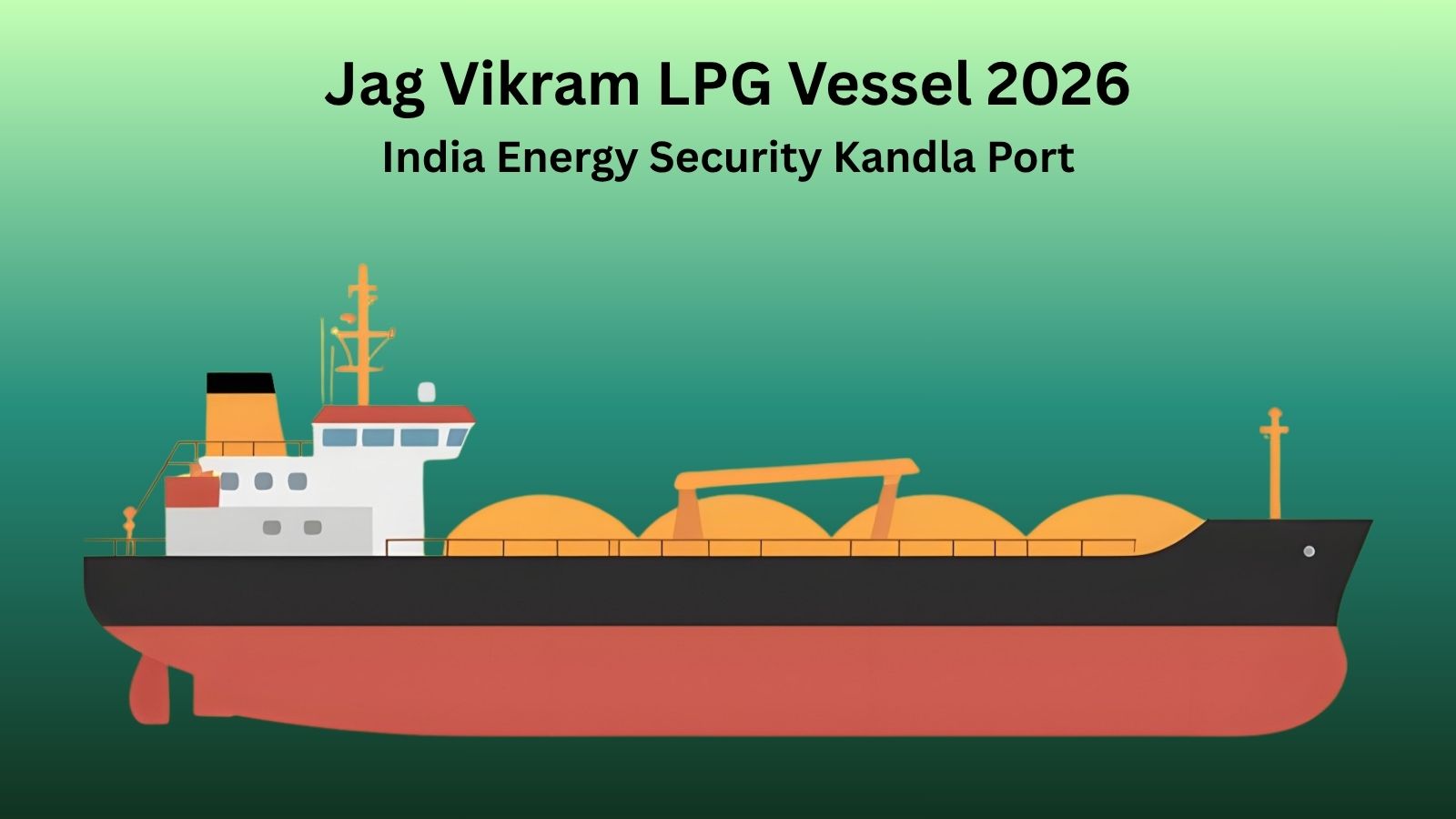
The successful arrival of the Indian-flagged LPG vessel Jag Vikram at Kandla Port on April 14, 2026, marks a significant milestone for India’s energy security. This development comes at a crucial time when regional tensions had disrupted maritime trade routes, making safe passage through key global shipping corridors highly challenging.
The vessel’s safe docking not only ensures a steady supply of fuel but also signals a gradual normalization of operations in one of the world’s most sensitive maritime regions. The Jag Vikram LPG vessel 2026 mission demonstrates India’s maritime resilience.
Key Highlights of the Transit
Strategic Passage Through a Critical Route
One of the most important aspects of this journey was the vessel’s successful navigation through the Strait of Hormuz on April 11, 2026. This passage is considered one of the most volatile and strategically significant maritime routes in the world.
Notably, Jag Vikram became the first Indian-flagged ship to cross this route after a 14-day ceasefire between the United States and Iran was announced, marking a crucial geopolitical breakthrough.
Cargo and Crew Safety
The vessel carried a substantial 20,400 metric tonnes of Liquefied Petroleum Gas (LPG), a critical fuel for domestic consumption across India.
The ship was manned by 24 Indian seafarers. All crew members reached safely without any reported incidents. Authorities confirmed a zero-incident transit, ensuring both cargo and personnel safety.
Docking at Deendayal Port
Jag Vikram docked late Tuesday night at Oil Jetty No. 1 under the Deendayal Port Authority at Kandla. This successful docking further strengthens India’s port operations and logistics capabilities during a sensitive geopolitical phase.
Energy Security Significance
Heavy Dependence on Gulf Imports
India relies heavily on imports for its LPG needs, with nearly 90% of supply sourced from the Gulf region. This makes safe maritime routes like the Strait of Hormuz extremely vital for maintaining India energy security.
Strengthening Domestic Supply
This delivery is particularly important because it is the ninth successful LPG delivery by an Indian vessel since tensions escalated in early March. Domestic LPG availability has now recovered to approximately 70% of pre-crisis levels. The shipment is expected to further stabilize supply across the country.
Return to Normal Maritime Operations
Officials from the Ministry of Ports, Shipping and Waterways have indicated that this successful mission reflects a gradual restoration of maritime trade in the Persian Gulf region. It signals improved confidence in shipping routes that were previously considered high-risk.
Ongoing Regional Efforts and Monitoring
Stranded Indian Vessels
Authorities are actively working with the Ministry of External Affairs to ensure the safe movement of approximately 15 other Indian-flagged vessels that are still awaiting passage near the Strait of Hormuz maritime route.
Large-Scale Repatriation
Efforts are also underway to ensure the safety of Indian seafarers. Over 2,177 Indian seafarers have already been safely repatriated. Ninety-three seafarers returned within the last 24 hours, highlighting the speed of ongoing operations.
Zero-Incident Status
In a positive development, no security incidents involving Indian vessels have been reported in the last 24 hours. Major Indian ports continue to function smoothly without congestion.
Strategic Importance of the Mission
The arrival of Jag Vikram represents more than just a routine shipment – it is a strong indicator of India’s resilience in maintaining its energy supply chain during uncertain times.
Key strategic outcomes include reinforced confidence in Indian maritime operations, improved supply chain stability for LPG, and strengthened coordination between government agencies for crisis management.
Continued Maritime Monitoring
Even after the successful docking of Jag Vikram, the Indian government continues to closely monitor the situation in the region.
Coordination between the Ministry of Ports and the Ministry of External Affairs is ongoing to ensure safe navigation for remaining vessels and timely return of ships waiting in high-risk zones.
Previous Successful Voyages
This mission follows earlier successful arrivals of LPG tankers such as Shivalik and Nanda Devi in mid-March, indicating a consistent effort to restore normal shipping operations.
Conclusion
The safe arrival of the LPG vessel Jag Vikram at Kandla Port is a major milestone for India’s energy security and maritime resilience. At a time when global shipping routes faced uncertainty, this successful mission demonstrates the country’s ability to maintain critical supply chains and protect its economic interests.
With continued monitoring, coordinated government efforts, and improving geopolitical conditions, India is steadily moving toward full normalization of maritime trade in the region.
Frequently Asked Questions
Q1. What was the significance of the Jag Vikram LPG vessel mission?
A1. Jag Vikram became the first Indian-flagged ship to cross the Strait of Hormuz after a 14-day US-Iran ceasefire, marking a major milestone for India’s energy security.
Q2. How much LPG did the Jag Vikram carry?
A2. The vessel carried 20,400 metric tonnes of Liquefied Petroleum Gas (LPG) to Kandla Port.
Q3. How many Indian seafarers were on board the Jag Vikram?
A3. The ship was manned by 24 Indian seafarers, and all crew members reached safely without any reported incidents.
Q4. What is India’s dependence on Gulf imports for LPG?
A4. India relies heavily on Gulf imports, with nearly 90% of LPG supply sourced from the Gulf region, making safe maritime routes extremely vital.
Q5. How many Indian seafarers have been safely repatriated during this crisis?
A5. Over 2,177 Indian seafarers have already been safely repatriated, with 93 returning within the last 24 hours.