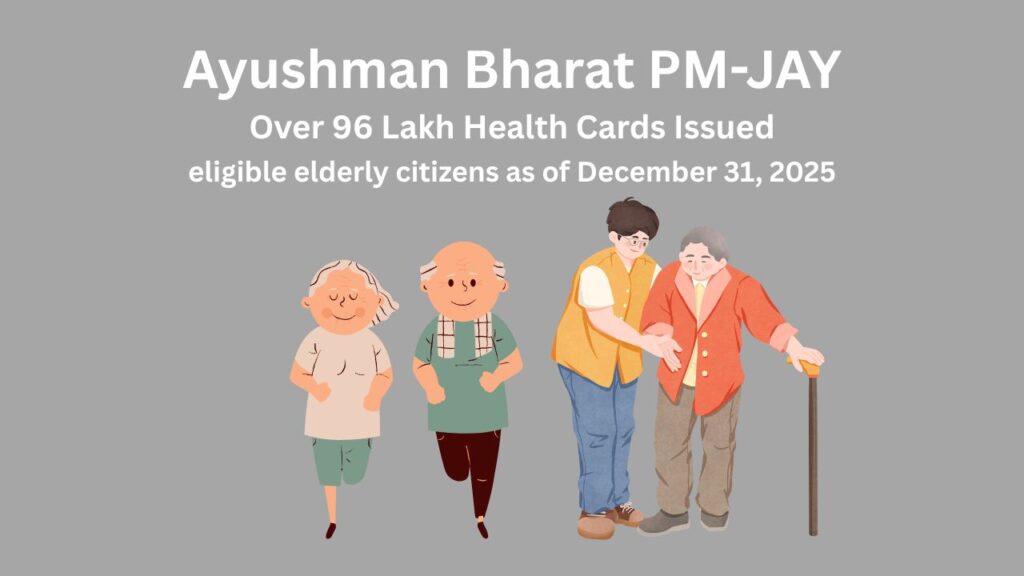
The government’s ambitious move to extend Ayushman Bharat coverage to all senior citizens aged 70 and above is picking up serious steam. Fresh data from early 2026 shows that more than 96.73 lakh Ayushman Vay Vandana Cards have already been issued to eligible elderly citizens as of December 31, 2025.
This expansion, announced to provide healthcare access to every senior citizen regardless of their income background, is now translating into real-world numbers. And those numbers tell an encouraging story about how India’s elderly population is finally getting the healthcare safety net they deserve.
Hospital Admissions and Treatment Cross Impressive Figures
The card issuance isn’t just about paperwork. Elderly citizens are actually using these benefits, and the statistics prove it.
Under this special category for seniors, over 10.33 lakh hospital admissions have been authorized so far. The total treatment approvals have crossed ₹2,154 crore. That’s not pocket change – it’s real money going toward real medical care for people who need it most.
When you break it down, these numbers suggest that elderly beneficiaries aren’t shy about seeking treatment. Whether it’s planned procedures or emergency care, the scheme is functioning exactly as intended – as a financial shield against crushing medical bills.
What the Full Coverage Target Looks Like
The government has set its sights high with this expansion. The eventual aim is to cover around 6 crore senior citizens belonging to approximately 4.5 crore families across the country.
Health policy experts describe this as one of the largest publicly funded elderly healthcare initiatives anywhere in the world. Given India’s demographic reality – a steadily aging population – getting this right matters more than ever.
Key Scheme Statistics at a Glance
- Ayushman Vay Vandana Cards issued: Over 96.73 lakh (as of December 31, 2025)
- Hospital admissions authorized: More than 10.33 lakh
- Treatment approvals value: Crossed ₹2,154 crore
- Target senior citizens: Around 6 crore
- Target families: Approximately 4.5 crore
- Annual coverage per senior: ₹5 lakh
How the Scheme Actually Works
Let’s clear up some confusion about who gets what under this expanded coverage.
Universal Eligibility – No Questions Asked
Here’s the simplest way to understand it. If you’re 70 years or older, you’re eligible. Period.
Income level doesn’t matter. Socio-economic classification doesn’t matter. Even if you already have private health insurance, you still qualify. The government has removed all those earlier filters that used to keep people out based on deprivation lists or income categories. Age is the only criterion now.
The “Family Wallet” Top-Up Explained
This is where things get a bit technical, but I’ll break it down simply.
For seniors who are part of families already covered under PM-JAY, here’s what happens. The family already has its ₹5 lakh annual coverage. On top of that, an additional ₹5 lakh top-up is added exclusively for the senior member. This extra amount cannot be used by other family members under 70. It’s reserved specifically for the elderly person’s treatment.
For families that weren’t eligible for PM-JAY before because they didn’t fit the earlier criteria, the rules are different. They now get ₹5 lakh annual coverage, but this amount is shared among all members aged 70 and above in that household. So if a family has two seniors, the ₹5 lakh coverage applies to both of them together.
One-Time Scheme Choice for Some
Senior citizens currently enrolled in other central government health schemes face a decision. This includes people covered under:
- Central Government Health Scheme (CGHS)
- Ex-Servicemen Contributory Health Scheme (ECHS)
They have to make a one-time choice. Either continue with their existing scheme or opt for PM-JAY benefits. Once this decision is made, it’s final. So eligible seniors need to compare both options carefully before picking.
Aadhaar-Based Verification
The enrollment process runs on Aadhaar. Identity and age authentication happen through the Aadhaar system, which keeps things streamlined and prevents duplicate registrations. For seniors who have their Aadhaar details ready, the process moves smoothly.
How Eligible Seniors Can Apply
Getting the Ayushman Vay Vandana Card isn’t complicated. There are multiple channels available:
- Official NHA Beneficiary Portal – Apply online from home if comfortable with digital processes
- Ayushman mobile application – For those who prefer applying through their smartphones
- Common Service Centres (CSCs) – Spread across the country, these centers offer assisted registration for seniors who need help
Applicants need their Aadhaar details and basic identity verification to complete the registration. Family members can help elderly parents navigate the process if needed.
Why This Expansion Matters More Than You Think
India’s aging population isn’t some distant future scenario – it’s happening right now. More people are living longer, which is wonderful news. But longer lives also mean more years when healthcare needs tend to increase.
For families with elderly parents or grandparents, medical expenses can become a serious financial burden. A single hospitalization can wipe out years of savings. The expanded PM-JAY coverage aims to change that by:
- Reducing out-of-pocket medical expenses that push families into debt
- Improving hospital access in empanelled facilities across the country
- Providing financial security for elderly households who often live on fixed incomes
Health policy analysts point out that this senior-focused extension could significantly improve both preventive and emergency care access. When people know they have coverage, they’re more likely to seek treatment early rather than delaying until conditions become critical.
The Road Ahead
With over 96 lakh cards already issued and more than 10 lakh hospital admissions authorized, the scheme is clearly gaining traction. But there’s still a long way to go before the full target of 6 crore seniors is covered.
State governments, district administrations, and healthcare providers all have roles to play in spreading awareness. Many eligible seniors, especially in rural areas, may not even know they qualify. Getting the word out matters as much as the scheme itself.
For the elderly citizens who’ve already received their cards, the message is simple. Healthcare when you need it, without the fear of what it might cost. That’s what this expansion is all about.
Looking Ahead
The numbers so far suggest strong early adoption, but the real test lies in consistent delivery. Will hospitals honor the coverage without creating hurdles? Will the claims process remain smooth as volume increases? Will more seniors come forward to enroll as awareness spreads?
These questions will find answers in the coming months. For now, the foundation is laid. Over 96 lakh seniors have their cards. Over 10 lakh have already used them for treatment. And crores more remain to be covered.
For a country moving toward universal healthcare, that’s progress worth noting.