If you or your family spend a lot of money on medicines every month, here is some good news. The Jan Aushadhi Yojana has now crossed 18,000 stores across India. Medicines here cost 50 to 90 percent less than branded ones. Let me explain how this scheme works and why it matters for you.
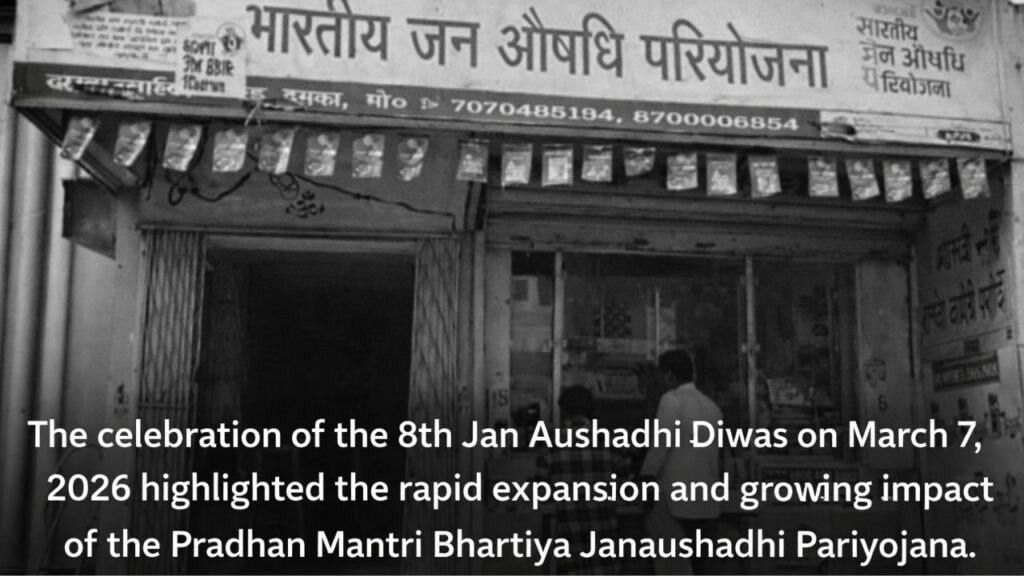
The 8th Jan Aushadhi Diwas was celebrated on March 7, 2026. This day marks how far the scheme has come since it started. What began as a small effort is now a huge network helping crores of Indians get affordable medicines.
What is Jan Aushadhi Yojana?
Pradhan Mantri Bhartiya Janaushadhi Pariyojana is a government scheme that provides quality generic medicines at very low prices. Generic medicines are just as effective as branded ones but cost much less because you are not paying for the brand name.
The scheme has become an important part of India’s healthcare system. It makes sure that even poor families can afford the medicines they need.
2026 Milestone: 18,000+ Jan Aushadhi Kendras
The numbers tell the story of how big this scheme has become.
Massive Network Expansion
As of February 28, 2026, there are 18,646 Jan Aushadhi Kendras running across India. These stores are not just in big cities. They are in small towns, villages, and even remote areas. The goal is to make affordable medicines available everywhere.
Future Target
The government wants to reach 25,000 Kendras by March 31, 2027. The focus will be on:
- Rural regions where people have less access to affordable medicines
- Tribal areas where healthcare facilities are limited
- Underserved populations who need help the most
Daily Public Impact
Every day, around 10 to 12 lakh people visit these stores. That is 10 to 12 lakh families buying medicines they need at prices they can afford.
When you buy a medicine at Jan Aushadhi, you pay 50 to 90 percent less than what you would pay for the branded version. For a family with someone who has a chronic illness like diabetes or heart disease, this means huge savings every month.
Product Portfolio and Cost Savings
The scheme now offers a wide range of products.
Wide Range of Medicines
Currently, Jan Aushadhi Kendras offer:
- 2,110 different medicines
- 315 surgical items
These cover 29 different categories of treatment, including:
- Anti-cancer drugs
- Cardiac medicines for heart patients
- Diabetes treatments
- Antibiotics
- Pain relievers
- Vitamins and supplements
Whatever medicine you need, there is a good chance you will find it here.
Financial Savings for Citizens
Since the scheme started, people have saved over ₹40,000 crore on medicine costs. Think about what that means. That is money that stayed in the pockets of ordinary families instead of going to expensive branded medicines.
Quality Assurance
One question people often ask is – are these medicines safe? The answer is yes.
Medicines sold at Jan Aushadhi Kendras come from WHO-GMP certified manufacturers. This is a high standard of quality. They are also tested at NABL-accredited laboratories before they are sold.
This ensures that:
- The medicines are safe to use
- They work effectively
- They are reliable
You are not compromising on quality when you buy from Jan Aushadhi. You are only paying less.
Key Initiatives in 2026
Several new initiatives were launched or highlighted in 2026.
Jan Aushadhi Saptah (March 1–7)
A week-long awareness campaign was held across more than 250 locations. During this time, free health check-ups were offered. People could get their blood pressure tested and thyroid screenings done.
This helped people understand the importance of regular health check-ups while also learning about the scheme.
Jan Aushadhi Suvidha (Sanitary Pads)
This is an important initiative for women’s health. Over 100 crore sanitary napkins have been sold through Jan Aushadhi Kendras. Each pad costs just ₹1.
This helps:
- Women maintain hygiene
- Families save money
- Young girls attend school without interruption
For ₹1, no girl or woman has to compromise on her health and dignity.
Digital Tools for Users
The Jan Aushadhi Sugam App makes it easy to find what you need. You can:
- Find the nearest store
- Check if a medicine is available
- Compare prices
With this app, you do not have to visit multiple stores to find your medicines. Everything is at your fingertips.
Support for Entrepreneurs
Jan Aushadhi Kendras are not just run by the government. Many are run by individual entrepreneurs who get support to start their stores.
The government provides incentives up to ₹2 lakh to help people open these stores. Special focus is given to:
- Women entrepreneurs
- SC/ST communities
- Divyang (disabled) individuals
This makes healthcare delivery inclusive while also creating opportunities for people to earn a living.
Last-Mile Accessibility
The scheme is making sure that medicines reach people wherever they are. One good example is the 116 Kendras that are now operational at railway stations.
If you are traveling and need medicine urgently, you can get it at the station. This improves accessibility for travelers and ensures emergency medicines are always available.
Why Jan Aushadhi Matters
Let us understand why this scheme is so important for India.
Affordable Healthcare for All
In India, many families fall into poverty because of medical expenses. When someone gets sick, the cost of medicines can drain all savings. Jan Aushadhi reduces this burden. Families can afford treatment without going into debt.
Boost to Generic Medicines
Many people still think that branded medicines are better than generic ones. This is not true. Generic medicines have the same active ingredients and work the same way. Jan Aushadhi is helping people understand this and make cost-effective choices.
Strengthening Public Health System
When medicines are affordable, people do not delay treatment. They buy what they need when they need it. This reduces the burden on hospitals because small problems do not become big problems.
Impact on Common People
Let us see how this scheme affects ordinary families.
Lower Medical Expenses
If someone in your family has diabetes or blood pressure, you know how much medicines cost every month. At Jan Aushadhi, the same medicines are available for much less. The savings add up quickly.
Increased Accessibility
Earlier, affordable generic medicines were only available in big cities. Now, with 18,000+ stores, even small towns and villages have access. You do not have to travel far to buy medicines.
Trust in Quality
When the government backs a system, people trust it. As more people use Jan Aushadhi and see the results, confidence in generic medicines grows.
Challenges and Future Scope
Like any large scheme, there are challenges to overcome.
Challenges
- Awareness in rural areas – many people still do not know about the scheme
- Preference for branded medicines – old habits are hard to change
- Supply chain consistency – ensuring all stores have all medicines at all times
Future Opportunities
The scheme is only going to grow. Future plans include:
- Expansion to more remote areas so no one is left out
- More digital integration to make ordering and tracking easier
- More product categories to cover even more medical needs
Conclusion
The Pradhan Mantri Bhartiya Janaushadhi Pariyojana has changed how millions of Indians buy medicines. With over 18,600 stores, 2,110 medicines, and more than ₹40,000 crore in savings, the numbers speak for themselves.
From cancer drugs to sanitary pads, from cities to railway stations, the scheme is reaching people everywhere. Every day, 10 to 12 lakh people walk into a Jan Aushadhi Kendra and buy the medicines they need at prices they can afford.
The government aims to reach 25,000 stores by March 2027. As the network expands, more families will benefit. More people will realize that quality medicines do not have to be expensive.
This scheme is making healthcare affordable for everyone. And in a country like India, that matters more than anything.
Frequently Asked Questions
Q: How many Jan Aushadhi Kendras are there in India?
A: As of February 28, 2026, there are 18,646 Jan Aushadhi Kendras operating across India.
Q: How much cheaper are medicines at Jan Aushadhi?
A: Medicines are available at 50 to 90 percent lower prices compared to branded drugs.
Q: How many people visit Jan Aushadhi Kendras daily?
A: Around 10 to 12 lakh people visit these stores every day.
Q: What products are available at Jan Aushadhi Kendras?
A: The scheme offers 2,110 medicines and 315 surgical items across 29 categories, including anti-cancer, cardiac, and diabetes medicines.
Q: Are Jan Aushadhi medicines of good quality?
A: Yes. Medicines come from WHO-GMP certified manufacturers and are tested at NABL-accredited laboratories.
Q: How much money has been saved by people through this scheme?
A: Over ₹40,000 crore has been saved since the scheme launched.
Q: What is the target for Jan Aushadhi Kendras?
A: The government aims to reach 25,000 Kendras by March 31, 2027.
Q: What is the price of sanitary pads at Jan Aushadhi?
A: Jan Aushadhi Suvidha sanitary pads are available for just ₹1 per pad.
Q: Is there an app to find Jan Aushadhi Kendras?
A: Yes, the Jan Aushadhi Sugam App helps you find nearby stores, check medicine availability, and compare prices.
Q: Who can open a Jan Aushadhi Kendra?
A: The scheme supports entrepreneurs, especially women, SC/ST, and Divyang individuals, with incentives up to ₹2 lakh.
Q: Are Jan Aushadhi medicines available at railway stations?
A: Yes, 116 Kendras are operational at railway stations for easy access to travelers.
Q: Why is Jan Aushadhi important for common people?
A: It makes quality medicines affordable, reduces medical expenses, and ensures access even in rural and remote areas.