6+ Yoga For Improving Posture And Body Awareness
6+ Yoga For Improving Posture And Body Awareness
Poor posture has become a common lifestyle concern in today’s screen-based routines. Long hours at desks and frequent phone use can influence how the shoulders and neck are positioned throughout the day.
Sitting in one position for extended periods may affect the natural alignment of the spine. Over time, this can change how the body feels and how it moves during daily activities.
Yoga for posture awareness has become one of the most searched wellness topics in 2025 and 2026. Many people use yoga to support better body alignment, feel lighter in the upper body, and reduce stiffness caused by long sitting hours.
Table of Contents
Key Takeaways On Yoga for Better Posture
- Yoga encourages awareness of body alignment
- Short daily sessions can support posture habits over time
- Core and back muscles play an important role in upright movement
- Gentle and alignment-focused styles are commonly practiced
- Consistency supports long-term posture awareness
Best yoga poses for posture awareness
The following yoga poses are often included in posture-focused routines. These movements work with the back, shoulders, hips, and core while encouraging balanced alignment.
- Child’s Pose
- Forward Fold
- Cat Cow Stretch
- Standing Cat Cow
- Chest Opener
- High Plank
- Side Plank
- Downward Facing Dog
- Pigeon Pose
- Thoracic Spine Rotation
- Glute Bridge
- Isometric Pulls
- Bridge Pose
- Mountain Pose
- Sphinx Pose
These poses focus on areas commonly involved in posture such as the upper back, shoulders, hips, and spine.
1) Child’s Pose
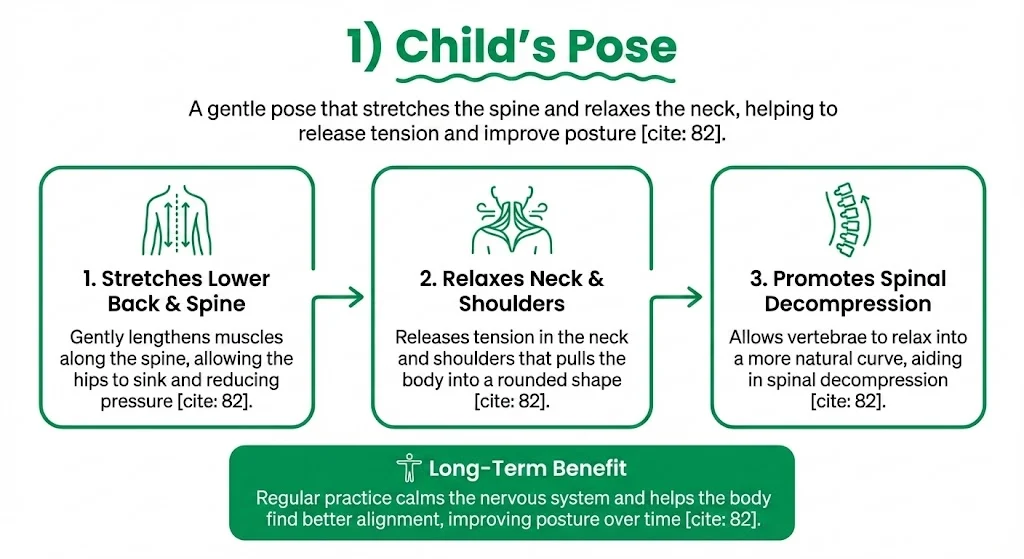
Child’s Pose gently stretches the back and shoulders. It is often used to relax the spine and encourage a neutral resting position.
This pose allows the muscles along the back to lengthen naturally while the hips rest toward the heels.
The main benefit is relaxation and improved awareness of body alignment.
2) Forward Fold
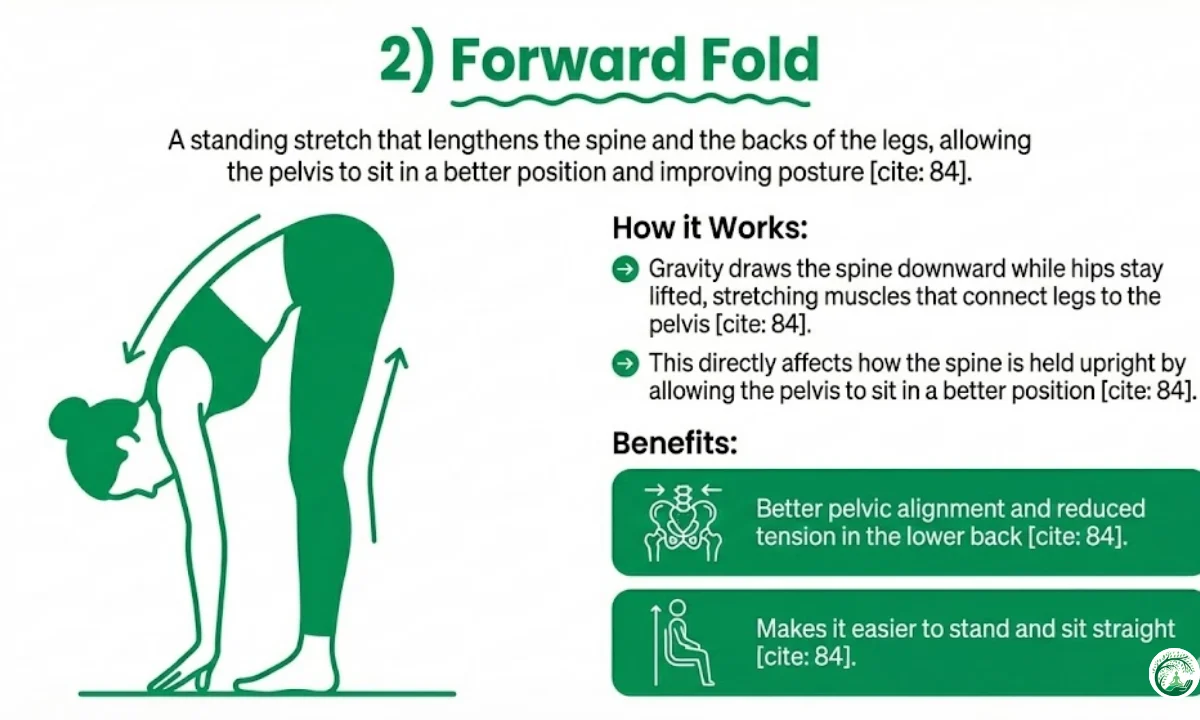
Forward Fold lengthens the spine and the backs of the legs. Tight leg muscles can influence how the pelvis and lower back are held.
This pose allows gravity to gently stretch the body while keeping the hips elevated.
The benefit is increased flexibility and posture awareness.
3) Cat Cow Stretch
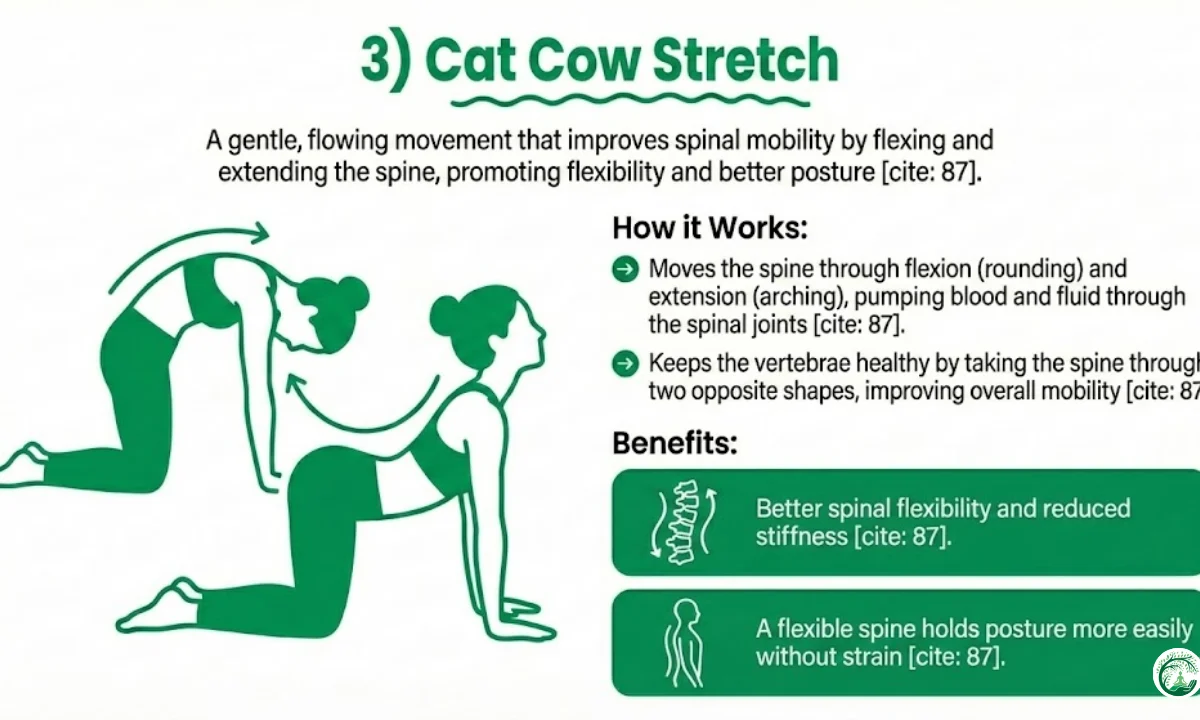
Cat Cow is a flowing movement that encourages the spine to move through different positions.
It alternates between opening and rounding the back, which supports general spinal mobility.
The benefit is smoother movement and flexibility.
4) Standing Cat Cow
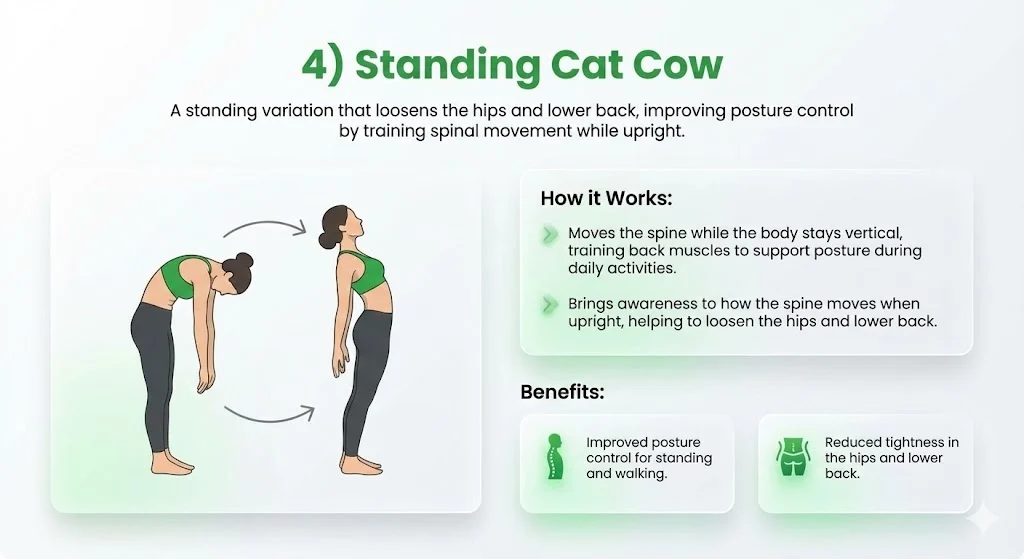
This standing version of Cat Cow brings attention to posture while upright.
The movement encourages the back muscles to support the spine in a vertical position.
The benefit is improved posture awareness during daily movement.
5) Chest Opener
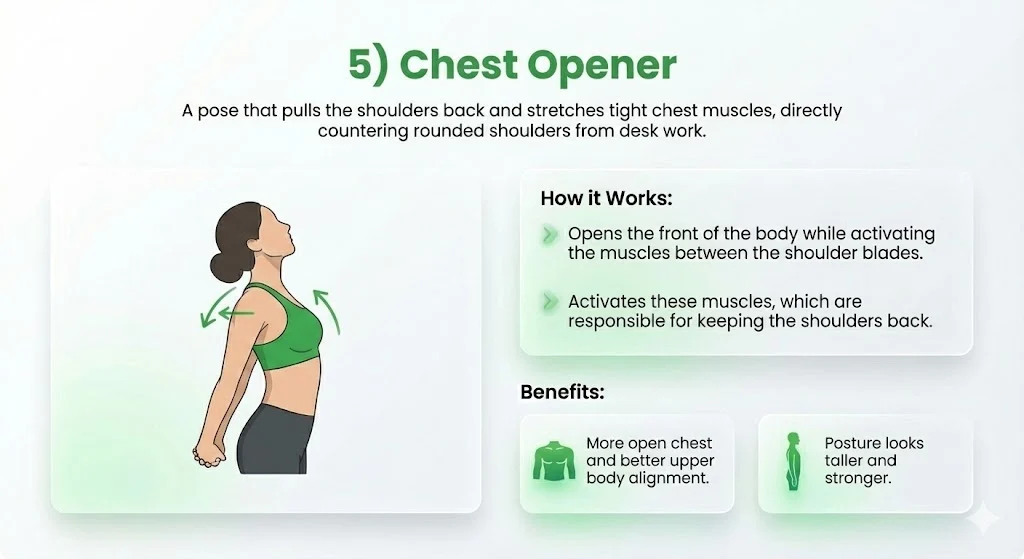
Chest opener poses stretch the front of the shoulders and upper body.
They activate muscles that support upright positioning.
The benefit is a more open upper body posture.
6) High Plank
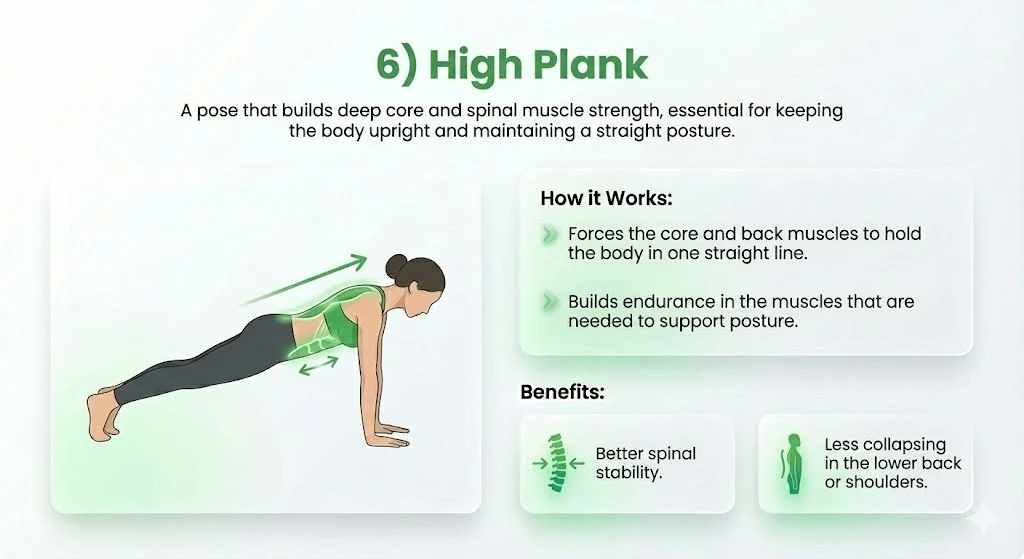
High Plank develops strength in the core and back muscles.
This pose encourages the body to stay in a straight line while supporting its own weight.
The benefit is improved stability and posture support.
Why Posture Concerns Are Increasing
Modern work and lifestyle habits often involve long periods of sitting and screen use. These routines influence how the shoulders, hips, and spine are positioned throughout the day.
Extended device use can encourage the neck to lean forward and the shoulders to round inward. Over time, these patterns affect overall body balance.
Posture habits may also influence breathing patterns and movement comfort during daily activities.
How Yoga Supports Posture Awareness
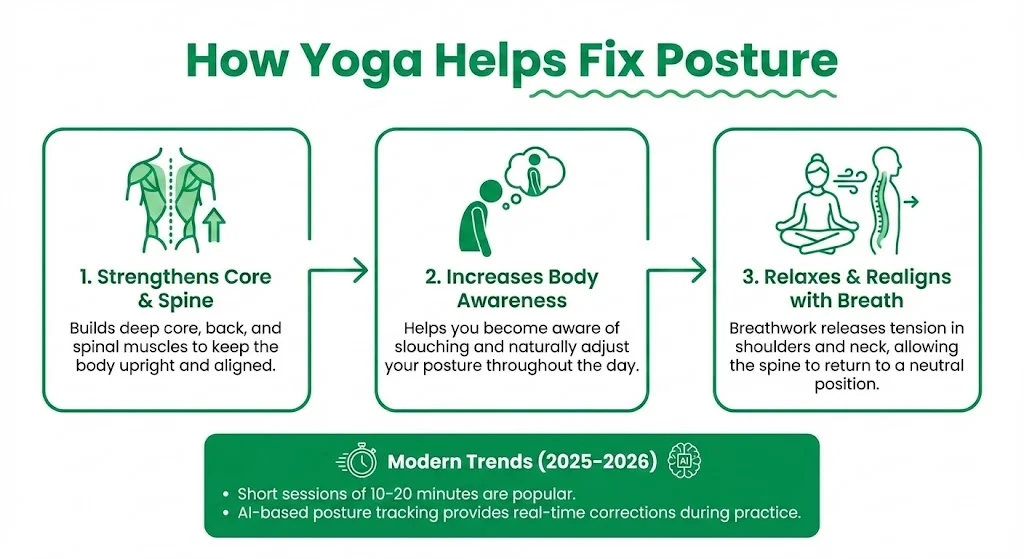
Yoga combines stretching, strength-building, and movement awareness. Many poses encourage the core and back muscles to work together for balanced alignment.
Yoga also promotes awareness of body positioning. People often notice when they begin to slouch and make small adjustments naturally.
Short daily sessions are popular in 2025 and 2026, focusing on mindful movement and posture habits.
Why Yoga Stands Out
Yoga is accessible and can be practiced without special equipment. It combines flexibility, strength, and awareness in one routine.
It also encourages mental focus, which supports mindful posture throughout the day.
In a screen-heavy world, yoga remains a popular way to support upright movement and balanced posture.
Tags: yoga, posture awareness, body alignment, flexibility, core strength
Related Posts :
Share This Post