Stress-Relief Yoga Routine You Can Do Anywhere: Simple Poses for Busy Lives
Stress-Relief Yoga Routine You Can Do Anywhere Simple Poses for Busy Lives
Stress-relief yoga routine you can do anywhere is becoming the go-to solution for millions dealing with daily pressure. Modern life keeps us constantly on edge with work deadlines, family responsibilities and endless notifications buzzing on our phones.
Our bodies hold this tension in tight shoulders, racing hearts and shallow breathing that never seems to slow down. The good news is that you do not need an expensive gym membership or fancy equipment to find relief.
A simple 10-minute yoga routine done in your office chair, bedroom floor or even a waiting room can activate your body’s natural calming system. These portable practices combine gentle movements with focused breathing to interrupt the stress cycle instantly.
Whether you are stuck in traffic, between meetings or winding down before bed, these anywhere yoga poses offer a pocket-sized escape from overwhelm. The best part is that you will start feeling calmer within minutes of your first stretch.
Key Takeaways
- Quick yoga breaks of just 5-10 minutes can reduce cortisol levels and calm your nervous system effectively
- No mat or special equipment needed, most poses adapt easily to chairs, walls or small floor spaces
- Focus on gentle forward folds, twists and breathing exercises for maximum stress relief
- Consistency matters more than duration, even 2-minute daily sessions show measurable benefits
- Popular poses include child’s pose, seated twists, legs up the wall and cat-cow stretches
- Breathing techniques like 4-7-8 breath enhance the calming effects of physical poses
- Best practiced during natural breaks like morning coffee, lunch hour or before bedtime
Also Read: The Difference Between Yoga Styles: Vinyasa Hatha Ashtanga Yin
Why Stress-Relief Yoga Works So Well
Your body enters fight-or-flight mode when stress hits. This reaction makes your heart pound faster, breathing becomes quick and shallow, muscles tense up waiting for danger.
Living in this heightened state constantly drains your energy and damages your health over time. Yoga interrupts this cycle by activating the parasympathetic nervous system which tells your body it is safe to relax.
Studies show that just 10 minutes of gentle yoga movements combined with slow breathing can lower stress hormones significantly. The combination works better than either movement or breathing alone. When you hold a forward fold or twist your spine gently, you are physically releasing the tension stored in your muscles. Adding controlled breathing sends calming signals directly to your brain. This is why people feel noticeably calmer after even brief yoga sessions.
Essential Poses for Your Anywhere Routine
Starting with child’s pose gives instant comfort to an anxious mind. Kneel on the floor or a cushion, sit back on your heels and fold forward over your thighs. Let your forehead rest on the ground or a pillow while your arms stretch forward.
This position naturally slows your breathing and creates a safe cocoon feeling. Hold it for one minute while focusing on lengthening each exhale. Cat-cow pose works perfectly at your desk or on all fours. Place hands on your knees if seated or the floor if kneeling.
Inhale as you arch your back and lift your chest upward. Exhale as you round your spine and tuck your chin toward your chest. Repeat this flowing movement 8-10 times to release back tension and improve circulation. The rhythmic motion paired with breath naturally calms racing thoughts.
Seated forward fold adapts to any chair or floor space. Sit with legs extended or feet flat on the ground. Hinge forward from your hips and let your hands rest wherever they reach comfortably. Drop your head and breathe into your back for 30-60 seconds.
This pose soothes digestive upset caused by stress while stretching tight hamstrings. Legs up the wall provides profound relaxation without any effort. Lie on your back near a wall and scoot your hips close to it.
Extend both legs straight up the wall forming an L-shape with your body. Rest here for 3-5 minutes while gravity helps drain tension from your legs. If no wall is available, place your calves on a chair seat instead. This gentle inversion calms the nervous system remarkably fast.
Making Yoga Part of Your Daily Routine
Building a sustainable practice means connecting yoga to activities you already do every day. Try one minute of cat-cow stretches right after you wake up and before checking your phone. Do a seated twist while your coffee brews in the morning.
Take three deep breaths in child’s pose before climbing into bed at night. These small moments add up to create lasting stress relief without requiring major schedule changes. The key is making it so easy that skipping feels harder than doing it.
Start with just 2-3 minutes per session and gradually increase as the habit becomes automatic. Quality matters far more than quantity when building stress resilience through yoga.
Desk workers benefit hugely from micro-breaks throughout the workday. Set a timer for every 90 minutes to do 2 minutes of neck rolls and seated twists. Stand up and do a forward fold during phone calls. These brief movement breaks prevent tension from building up in the first place.
Your productivity will actually improve because a calm nervous system focuses better than a stressed one. Evening routines work best with slower restorative poses. Spend 5 minutes with legs up the wall while listening to calming music.
Follow with corpse pose lying flat on your back, arms relaxed by your sides, letting your whole body melt into the floor. End with 4-7-8 breathing where you inhale for 4 counts, hold for 7 counts and exhale for 8 counts. Repeat this cycle 4 times to signal your body that sleep time is approaching.
Simple Breathing Techniques to Boost Calm
Breath control gives you immediate access to stress relief anywhere, anytime. The 4-6 breathing pattern works remarkably well for quick anxiety reduction. Breathe in slowly through your nose for 4 counts. Pause briefly at the top.
Exhale through your mouth for 6 counts making the out-breath longer than the in-breath. The extended exhale activates your vagus nerve which directly calms your nervous system. Do this for just 2 minutes and notice tension melting from your shoulders.
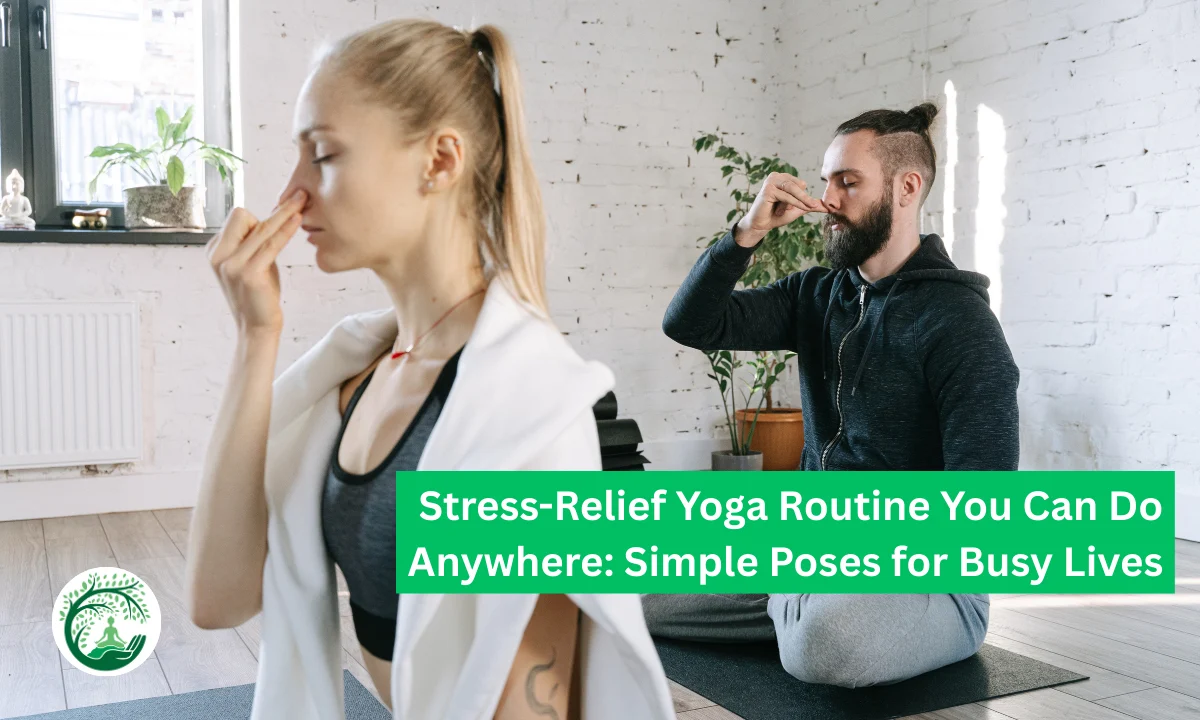
Alternate nostril breathing provides deeper nervous system reset when you have 5 minutes available. Use your thumb to close your right nostril and inhale through the left side. Close the left nostril with your ring finger and exhale through the right side. Inhale right, switch and exhale left. Continue alternating for 10-15 rounds to balance energy and quiet mental chatter.
Adapting Poses for Different Spaces
Office spaces require subtle modifications that look professional. Seated spinal twist becomes your secret stress weapon during meetings. Sit tall in your chair, place your right hand on the back of the chair and twist your torso gently to the right.
Hold for 20 seconds breathing slowly, then switch sides. This wrings out tension without drawing attention. Neck rolls work perfectly during video calls with camera off. Slowly circle your head clockwise 5 times, then counterclockwise 5 times. Add shoulder rolls by lifting shoulders to ears, pulling them back and down. Repeat 10 times to release the most common stress holding pattern.
Traveling makes stress worse but also offers unexpected yoga opportunities. Airplane seats allow for seated forward folds and ankle circles during long flights. Airport bathrooms provide private space for standing forward folds and wall-supported stretches.
Hotel rooms become your temporary yoga studio with the bed serving as a prop for supported legs-up positions. Car rides during traffic jams turn into breathing practice sessions. Even 30 seconds of focused exhales while gripping the steering wheel makes a difference. The freedom to practice anywhere means stress never catches you without tools to fight back.
Common Mistakes to Avoid
Pushing into pain defeats the purpose of stress-relief yoga. These poses should feel like a gentle release, never forcing or straining. If something hurts, back off immediately and try a gentler variation. Holding your breath accidentally happens when concentrating hard on positions.
Remember that breath is actually more important than the pose itself. Keep breathing slowly and steadily throughout every movement. Comparing yourself to others or expecting perfect poses creates more stress instead of reducing it. Your tight hamstrings or stiff shoulders are completely normal. Focus on how you feel inside rather than how you look outside.
Skipping the relaxation at the end wastes much of the benefit you just created. Always finish with at least 1 minute in corpse pose or seated with eyes closed. This integration time allows your nervous system to fully absorb the calming effects.
Many people jump up immediately and miss this crucial reset moment. Irregular practice makes results inconsistent. Doing 30 minutes once a week helps less than 5 minutes daily. Your nervous system responds best to frequent gentle reminders that safety and calm are available. Think of it like watering a plant, small amounts regularly work better than drowning it occasionally.
Conclusion
Creating your stress-relief yoga routine you can do anywhere gives you powerful control over your mental and physical wellbeing. These simple poses and breathing techniques work in any location, requiring no special equipment or flexibility.
Starting with just 2-5 minutes per day builds a foundation that grows naturally over time. The combination of gentle movement and focused breathing provides scientifically proven stress reduction that you can feel within minutes.
Whether you practice at your desk, in your car or before bed, consistency matters most for lasting results. Your body craves these moments of calm amid the chaos of modern life. Make the commitment to try one pose today and notice how different you feel afterward. Stress will always exist but now you have practical tools to manage it effectively anywhere life takes you.
Related Posts :
Share This Post