How To Enter Flow State While Studying

How To Enter Flow State While Studying
Flow state is a mental zone where studying starts to feel smooth and natural. Your focus becomes sharp. Time starts to move fast. You stay deep in your work without forcing yourself. Many students want this state because it helps them learn faster and stay calm. Researchers describe flow as complete immersion in one task with clear goals and stable focus.
Key research in psychology explains that flow happens when your skill level and the difficulty of the task match well. Students today often talk about this online, especially during exam seasons. They share moments where studying becomes effortless.
Music, clean spaces, soft focus, and calm routines are often linked to these flow moments. Many people say that once they experience it, they want to reach it again.
Key Takeaways On How To Enter Flow State While Studying
- Flow state helps you study with deep focus and less stress.
- It happens when the task matches your skill level.
- Environment, mindset, and energy level play a big role.
- Distractions break flow fast, so preparation matters.
- Flow feels rewarding, so studying becomes enjoyable.
Flow state is seen across many fields like sports, music, and academics. Students often report that exams feel easier when they study in flow. They forget the clock. They avoid checking their phones. Their attention sits fully on the page.
This state improves retention, motivation, and understanding. Let us look at how you can enter this state while studying with simple steps.
Also Read: Stress Reducing Activities for Kids: Simple Ways to Help Your Child Relax
What Is Flow State in Studying
Flow is a mental condition where your brain locks into one task. Your focus becomes stable. Your worries fade into the background. You do not think too much about the result. You simply perform the task in front of you. In studying, this means reading, solving, or revising without drifting away.
Flow normally appears when the work is slightly challenging but not overwhelming. If the material is too easy, you get bored. If it is too hard, stress appears. Flow sits in the middle zone. The brain works at full capacity but remains calm. This makes learning smoother.
Students online describe flow as peaceful. Some mention study music. Others prefer silence. Some even reach flow during multitasking with soft background noise. The key factor is immersion.
Why Flow State Matters for Students
Flow is linked to better focus, stronger memory, and high productivity. Students report that they can study longer without feeling drained. The work feels engaging instead of heavy.
Flow also reduces distractions. Since your brain stays occupied, scrolling or wandering thoughts reduce. This improves consistency in your study routine.
Psychology research also connects flow with happiness. The act of learning becomes rewarding. Over time, this builds confidence.
Conditions That Support Flow While Studying
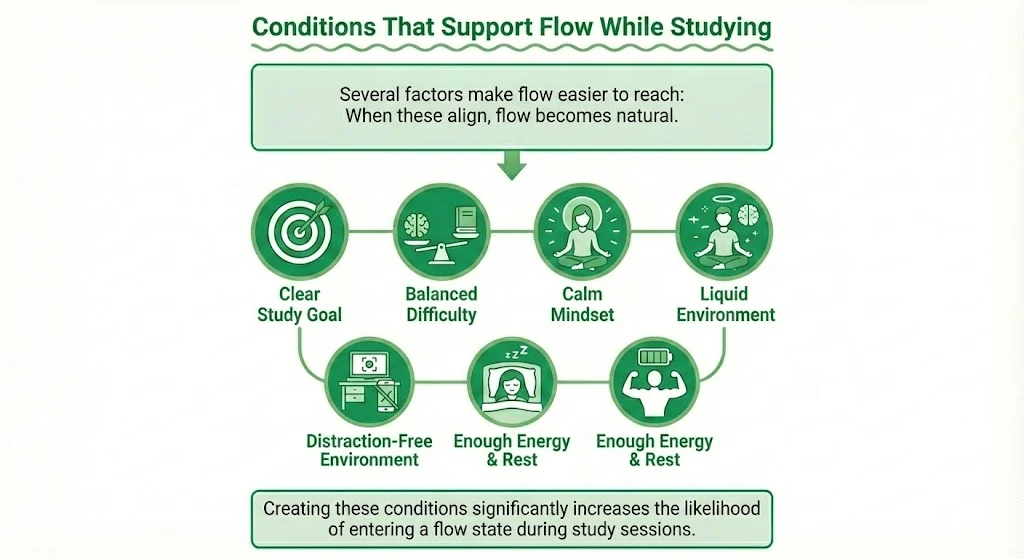
Several factors make flow easier to reach:
- A clear study goal
- Balanced difficulty
- Calm mindset
- A distraction free environment
- Enough energy and rest
When these align, flow becomes natural.
Social media trends show students celebrating these moments. Many talk about entering flow suddenly while highlighting notes or revising complex topics. They enjoy the feeling of time disappearing. This emotional reward keeps motivation strong.
Build the Right Environment for Flow
Your study space has real impact. A clean desk with only the required materials helps your brain lock in. Many students keep their phones away. Apps that block websites are becoming popular for this reason.
Light, temperature, posture, and comfort matter as well. A quiet or gently noisy space supports sustained focus. Lo fi or instrumental music is often preferred because it avoids lyrics that interrupt focus.
Flow works best when distractions are rare. This allows your mind to stay steady.
Study When Your Energy Is High
Every student has natural energy peaks. Some prefer mornings. Some prefer late nights. Flow happens most easily when you are awake and alert.
Tracking your energy for a few days can help you choose the right time window. Once you find that period, use it only for deep study.
Students often report that they hit flow faster after sleep or short rest. Tired brains resist deep focus.
Set Simple and Clear Goals
Before starting a session, define the task. Avoid vague plans like study chemistry. Choose something specific. For example:
- Read 8 pages
- Revise one topic
- Solve 10 questions
Clear goals stop your mind from wandering. They create direction. This clarity supports immersion.
When the brain knows the target, it enters flow more easily.
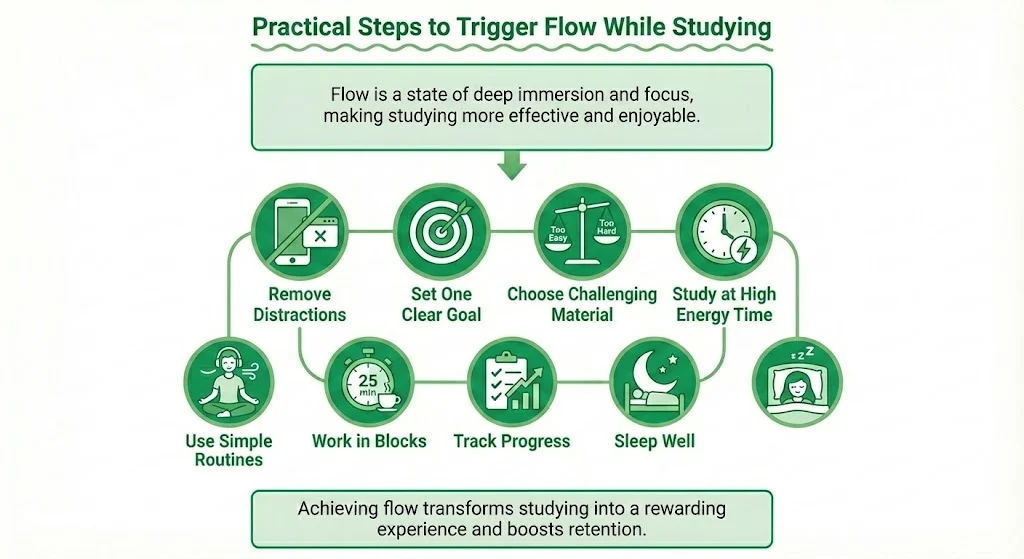
Practical Steps to Trigger Flow While Studying
- Remove distractions like phones or unrelated tabs.
- Decide one clear study goal for the session.
- Choose material that is not too easy and not too hard.
- Study during your highest energy time.
- Use simple routines like deep breathing or quiet music before starting.
- Work in blocks with short breaks to maintain focus.
- Track progress to stay motivated.
- Sleep well to support mental clarity.
These steps align with common public experiences and research insights. They also match what students online share when talking about flow.
Stay Present During Study Sessions
Flow happens when you focus only on the current task. Thinking ahead to exams or marks may trigger anxiety. Flow prefers calm mental space.
Short study blocks help maintain presence. For example, 25 to 40 minute periods. During this time, give full attention to one task. No switching. No multitasking.
This helps your brain stabilize attention.
Build Inner Control and Confidence
Students who feel in control reach flow faster. This comes from preparation and steady habits. Avoid last minute study pressure. That pressure breaks flow.
Positive self talk also helps. Doubt interrupts focus. Calm belief supports immersion.
Some students find studying with friends useful when everyone stays disciplined. Others prefer solo study. Choose what maintains peace of mind.
Rest, Health, and Flow State
Flow requires mental energy. Sleep, nutrition, and physical movement support brain function. Without rest, concentration drops.
Students who maintain balanced routines find it easier to enter deep focus. Flow should support health, not replace it.
Good sleep also improves retention. Your brain processes information better when rested.
Public Views and Social Trends on Flow State
Recent online conversations show strong interest in flow during study periods. Students enjoy sharing moments when music, notes, or repetition place them in full focus. Many describe it as rewarding.
Some express frustration about distractions and short attention spans. Tips such as keeping phones away or using simple rituals are common. Music, coffee, calm lighting, and clean spaces often feature in these discussions.
There is also humor around partial flow like studying for 10 minutes and scrolling for 10 minutes. This shows the common struggle but also rising awareness about focused learning.
Final Thoughts
Flow state is not magic. It is a natural mental condition that appears when challenge and skill balance well. With calm habits and simple structure, students can reach this state often. The key idea is to remove distractions, choose the right task, and enter study with clear intention.
When flow becomes part of your routine, studying feels lighter. The work becomes meaningful. Time passes with ease. This helps you stay consistent and confident in your learning journey.
Tags: flow state, studying tips, student productivity, deep focus, learning psychology, exam preparation
Related Posts :






Share This Post