Everyday Routines That Play a Role in Metabolism and Weight Awareness

Everyday Routines That Play a Role in Metabolism and Weight Awareness
Many individuals explore everyday lifestyle patterns to better understand how their bodies use energy without depending only on gym-based routines. Daily habits, food choices, and rest schedules all play a role in overall wellness. This has led to growing interest in metabolic-focused lifestyle discussions.
Metabolic habits generally describe simple daily practices that may support how the body functions. These approaches often focus on balance, consistency, and aligning routines with natural daily rhythms. Small, gradual adjustments are commonly viewed as more sustainable than sudden or extreme changes.
In recent years, lifestyle-based conversations around weight awareness have become more common. Topics frequently include meal timing, sleep patterns, stress awareness, and everyday movement. These habits are typically explored as supportive wellness strategies rather than substitutes for professional guidance.
Online discussions often share personal experiences related to lifestyle routines. It is important to note that individual responses vary, and outcomes can differ from person to person. Factors such as diet, activity level, and rest all contribute to overall energy balance.
Key Takeaways
- Meal timing is often discussed in relation to daily energy patterns
- Protein-rich foods are commonly linked with feelings of fullness
- Consistent sleep supports daily routines and general well-being
- Mindful beverage choices can reduce unnecessary calorie intake
- Daily movement outside formal exercise contributes to energy use
- Limiting sweetened drinks is widely mentioned in nutrition education
- Stress-awareness practices encourage mindful eating habits
Also Read: Calorie Mistakes That Slow Down Fat Burning
Understanding Weight Awareness Without Structured Exercise
Weight changes are often explained through the concept of energy balance, which refers to the relationship between energy intake and energy use. The body requires energy for essential functions such as breathing, digestion, and daily movement.
Although exercise can increase energy use, it is not the only contributing factor. The body continues to use energy throughout the day, even during periods of rest. Lifestyle habits, food choices, and routine movement all play a role in this process.
Hormonal systems are commonly mentioned in discussions related to appetite and energy levels. These systems are complex and influenced by sleep, stress, and nutrition. Maintaining regular habits may help support overall balance rather than focusing on any single factor.
Hunger and fullness signals can differ between individuals. Paying attention to these cues, along with maintaining consistent routines, is often encouraged in general wellness education.
How Daily Habits Relate to Metabolic Function
Metabolism refers to how the body converts food into usable energy. This includes basic bodily functions, digestion, and physical activity. Each of these elements contributes differently depending on personal factors such as age, body composition, and daily routine.
Everyday movement includes actions such as walking, standing, and light activity during the day. These movements may seem minor individually but can accumulate over time.
People naturally differ in how their bodies manage energy. Many wellness resources encourage gradual changes and steady routines instead of extreme or restrictive approaches.
Lifestyle Habits Commonly Discussed for Weight Awareness
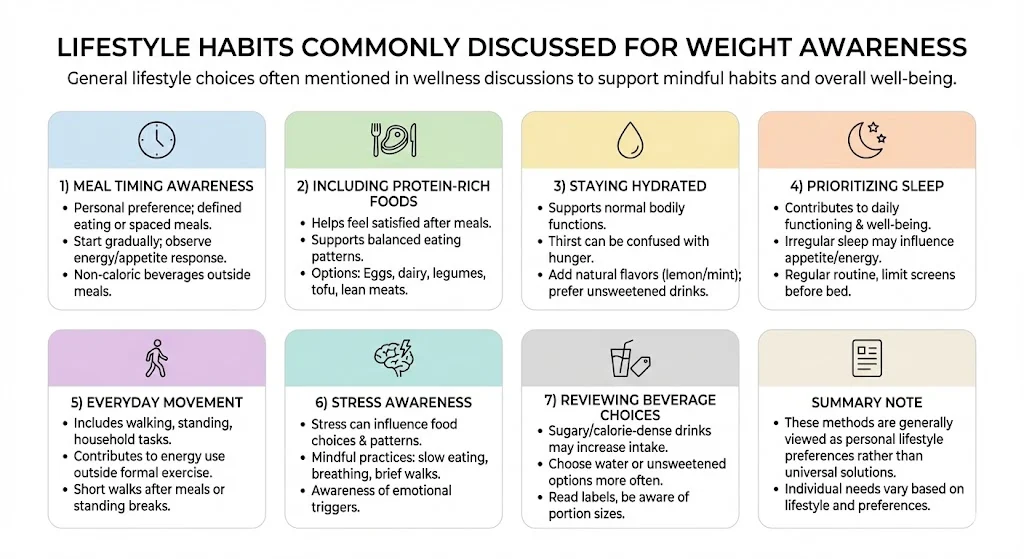
1. Meal Timing Awareness
Meal timing is frequently mentioned in wellness discussions. Some individuals choose defined eating periods, while others prefer evenly spaced meals. These methods are generally viewed as personal lifestyle preferences rather than universal solutions.
Those who explore meal timing often begin gradually and observe how their energy levels and appetite respond. Non-caloric beverages such as plain water or unsweetened tea are commonly chosen outside meal periods.
2. Including Protein-Rich Foods
Protein-containing foods are widely associated with helping people feel satisfied after meals. Including protein sources may support balanced eating patterns. Common options include eggs, dairy products, legumes, tofu, and lean meats.
Meals that combine protein with vegetables and whole foods are often highlighted in general nutrition guidance. Individual needs may vary based on lifestyle and preferences.
3. Staying Hydrated
Regular water intake supports normal bodily functions and forms part of daily healthy routines. Sometimes thirst may be confused with hunger, so drinking water throughout the day can help support mindful eating habits.
Some people add natural flavors such as lemon or mint to their water. Unsweetened beverages are commonly preferred over sugary drinks for everyday hydration.
4. Prioritizing Sleep
Sleep contributes to daily functioning and overall well-being. Irregular or limited sleep may influence energy levels and appetite cues the next day.
Maintaining a regular bedtime routine, limiting screen exposure before sleep, and creating a comfortable sleeping environment are commonly mentioned as part of healthy sleep habits.
5. Everyday Movement
Movement outside structured exercise includes walking, standing, household tasks, and light daily activity. These actions contribute to overall energy use without requiring formal workout sessions.
Simple habits such as short walks after meals or standing breaks during work hours are often suggested as practical additions to daily routines.
6. Stress Awareness
Stress can influence food choices and eating patterns. Mindful practices such as slow eating, breathing exercises, or brief walks are commonly discussed in wellness education.
Becoming aware of emotional triggers related to eating can support more intentional decisions over time.
7. Reviewing Beverage Choices
Sugary drinks and calorie-dense beverages may increase daily intake without providing long-lasting fullness. Many nutrition resources suggest choosing water or unsweetened options more often.
Reading ingredient labels and being aware of portion sizes can help improve daily intake awareness without strict rules.
Building a Sustainable Routine
Starting with one or two manageable changes is often considered more practical than making many adjustments at once. Gradual habit-building allows routines to feel more natural and easier to maintain.
Progress can be reflected in many ways, such as improved energy levels, comfort, and consistency in daily routines.
Measuring Progress Mindfully
Daily weight changes are common and influenced by various factors. Some individuals prefer observing non-scale indicators such as clothing fit, daily energy, and routine stability.
Focusing on overall well-being rather than short-term changes supports a more balanced and realistic approach to weight awareness.
Tags: weight awareness, metabolic habits, lifestyle nutrition, mindful eating, daily movement, sleep and wellness
Related Posts :






Share This Post