Evidence Based Sleep Hygiene Practices: Science Backed Habits For Better Sleep Quality
Evidence Based Sleep Hygiene Practices: Science Backed Habits For Better Sleep Quality
Evidence based sleep hygiene practices are becoming a central part of modern health routines as more people recognize the role of sleep in mental clarity, immunity, and long term well being.
Research and public discussions now agree that sleep is not only about hours spent in bed but also about daily habits and bedroom conditions that support natural sleep cycles. These practices focus on consistent timing, managing light exposure, reducing stimulants, and building calming routines before bedtime.
Many people try quick fixes such as supplements or weekend catch up sleep, but scientific findings and real world experience show that simple and repeatable habits work better. Sleep hygiene is now viewed as a first line approach before medications.
It is used by athletes, students, and working adults to improve focus, mood, and physical recovery.
Key Takeaways
- Evidence based sleep hygiene focuses on habits and environment that support natural sleep rhythms.
- Consistent sleep timing and reduced screen exposure are among the most effective strategies.
- Public opinion supports sleep hygiene as a foundation for mental health and longevity.
- Myths such as alcohol helping sleep or weekend recovery sleep are increasingly rejected.
- Simple routines and education based interventions show measurable improvements in sleep quality.
Also Read: How To Achieve Flow State At Work : Boost Focus And Work Smarter
What Evidence Based Sleep Hygiene Means?
Sleep hygiene refers to daily behaviors and environmental choices that improve sleep quality and duration. Evidence based sleep hygiene practices are supported by research and clinical use. These practices focus on three main areas. Behavior such as caffeine intake and exercise. Environment such as light and temperature. Control such as using the bed only for sleep.
Unlike trends or hacks, these practices are tested in studies and used in therapies like cognitive behavioral therapy for insomnia. They are not presented as cures but as supportive steps that improve the chances of healthy sleep.
Why Sleep Hygiene Matters For Health?
Sleep affects almost every system in the body. Poor sleep is linked to mood changes, low concentration, and higher stress levels. Long term sleep problems are also connected with heart health, immunity, and mental disorders.
Recent public discussions compare poor sleep risks to smoking and obesity. Many people now consider sleep hygiene equal in importance to nutrition and exercise. This shift shows growing trust in science based routines instead of myths.
Core Evidence Based Sleep Hygiene Practices
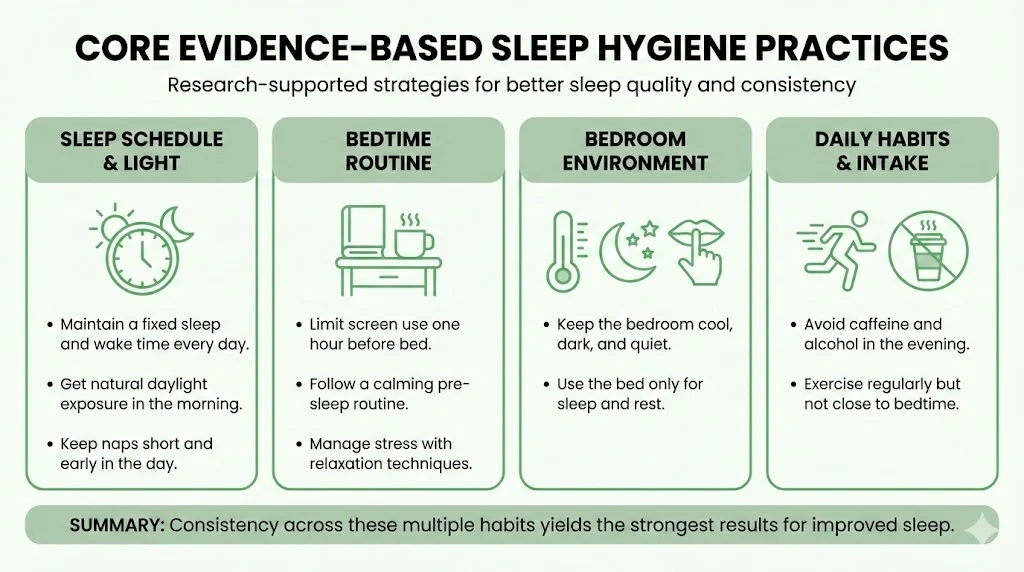
Below is a listicle of the most reliable practices supported by research and public health guidance.
Top 10 Evidence Based Sleep Hygiene Practices
- Maintain a fixed sleep and wake time every day.
- Limit screen use one hour before bed.
- Avoid caffeine and alcohol in the evening.
- Keep the bedroom cool, dark, and quiet.
- Exercise regularly but not close to bedtime.
- Use the bed only for sleep and rest.
- Follow a calming pre sleep routine.
- Get natural daylight exposure in the morning.
- Keep naps short and early in the day.
- Manage stress with relaxation techniques.
These steps work together. One habit alone helps but consistency across several habits brings stronger results.
Sleep Schedule And Circadian Rhythm
A stable sleep schedule trains the body clock. Going to bed and waking up at the same time helps regulate hormones like melatonin. Many people believe they can recover lost sleep on weekends. Research shows this does not fully restore brain and body balance.
Consistency improves alertness during the day and makes falling asleep easier at night. Even small shifts of thirty minutes can disturb sleep rhythm when repeated often.
Light Exposure And Screen Use
Light controls sleep timing. Bright light in the morning supports alertness. Darkness in the evening supports sleepiness. Smartphones and televisions emit blue light which delays melatonin release.
Public opinion strongly criticizes phone use in bed. Many describe phones as the biggest sleep disruptor. Reducing screen exposure before bed is now one of the most accepted sleep hygiene steps.
Bedroom Environment Optimization
A good sleep environment reduces disturbances and supports relaxation. Research identifies temperature, noise, and light as major factors.
| Environment Factor | Recommended Practice | Reason |
|---|---|---|
| Temperature | Cool and comfortable room | Supports body cooling for sleep |
| Light | Dark room or eye mask | Prevents melatonin suppression |
| Noise | Quiet or white noise | Reduces sleep interruptions |
| Bedding | Comfortable mattress and pillow | Improves physical comfort |
This table shows that small physical changes can improve sleep without medication.
Diet And Substance Timing
Caffeine stimulates the nervous system. Alcohol may cause drowsiness but breaks sleep later in the night. Heavy meals close to bedtime can cause discomfort and poor sleep quality.
Evidence based guidance suggests eating lighter meals in the evening and stopping caffeine in the afternoon. Many people now replace late coffee with herbal tea or water.
Exercise And Daytime Habits
Exercise improves sleep depth and mood. Morning or afternoon activity is most effective. Late night intense workouts can delay sleep.
Daytime sunlight exposure also helps regulate sleep timing. People who spend time outdoors report easier sleep onset and better morning alertness.
Stress Management And Wind Down Routine
Mental stress keeps the brain active at night. A wind down routine helps signal the body that sleep time is approaching. Common routines include reading, stretching, breathing exercises, or quiet music.
Sleep anxiety is rising among young adults. Experts advise flexibility rather than perfection. Simple routines practiced daily show better results than strict rules.
Myths Around Sleep Hygiene
Several myths continue to circulate but are increasingly challenged.
- Less than seven hours of sleep is enough for most adults.
- Alcohol improves sleep quality.
- Older adults need much less sleep.
- More sleep is always better than balanced sleep.
Evidence shows that most adults need seven to nine hours regularly. Both short and very long sleep durations can be linked to health problems.
Supportive Tools Alongside Sleep Hygiene
Some people use herbs or supplements such as chamomile or cannabinoids. Public opinion views these as supportive tools, not replacements for habits. Education programs and digital sleep therapy tools also show positive results.
Recent studies report that simple reminders and short educational content improve sleep behavior in older adults and teenagers.
Public Opinion On Evidence Based Sleep Hygiene Practices
Public discussion reflects strong respect for science backed sleep routines. Many users describe sleep hygiene as part of longevity and performance strategies. Athletes mention improved focus and recovery. Parents talk about helping children manage anxiety through better sleep routines.
There is frustration as well. People admit it is hard to maintain perfect habits in a digital world. Despite this, most agree that reducing screens, avoiding late caffeine, and staying consistent brings noticeable benefits.
Smartphones are often blamed as the main disruptor. Users call for discipline rather than dependence on stimulants or sleep pills. Overall, sleep hygiene is viewed as empowering and accessible.
Relationship Between Sleep Hygiene And Mental Health
Sleep and mental health influence each other. Poor sleep increases anxiety and low mood. Better sleep habits improve emotional balance and resilience.
Posts also highlight sleep hygiene as part of recovery for chronic stress and conditions like fibromyalgia. The tone is supportive rather than medical. Sleep hygiene is described as a base layer of care.
Role In Long Term Wellness And Longevity
Sleep hygiene is now listed alongside exercise and diet in wellness routines. People connect good sleep with brain health and immunity. Some discussions link poor sleep with reduced life expectancy.
The idea of sleep as a first line defense is becoming common. It is affordable and does not require special equipment.
Limitations Of Sleep Hygiene Alone
Sleep hygiene helps many people but it is not a cure for all sleep disorders. Serious insomnia or medical sleep problems may need professional care. Sleep hygiene works best as a supportive framework.
Experts encourage testing habits and keeping what works. Small changes often lead to steady improvement over time.
Tags: sleep hygiene practices, evidence based sleep habits, better sleep routine, circadian rhythm health, sleep and mental health, healthy sleep environment, insomnia awareness
Related Posts :




Share This Post