Face Yoga Explained: Exercises, Research, and Everyday Practice
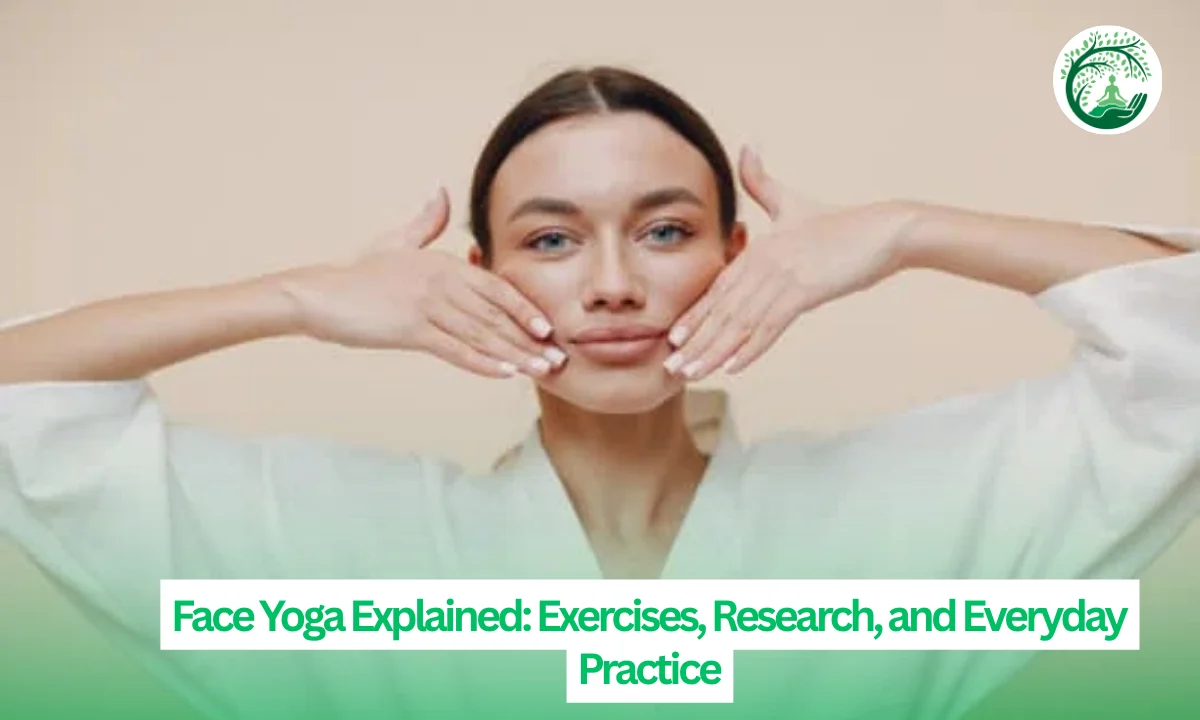
Face Yoga Explained: Exercises, Research, and Everyday Practice
Face yoga has become a popular wellness trend in 2025 and 2026. Many people are exploring simple ways to care for their skin without cosmetic procedures or invasive methods.
Short face yoga routines shared on social media and fitness platforms have made this practice easy to follow at home. Users often describe their experience as feeling more relaxed and aware of their facial muscles after regular practice.
Face yoga is commonly compared to gentle exercise for the face. Facial muscles naturally change with age, and regular movement may help people feel more connected to these muscles. Interest continues to grow as more individuals share their personal routines and experiences online.
Table of Contents
Key takeaways On Face Yoga
- Face yoga is a form of facial movement and awareness practice
- It focuses on controlled facial expressions and light massage
- Some people report feeling more relaxed and refreshed
- Research shows mixed and limited findings
- It is a low-cost self-care activity for many users
Also Read: Face Yoga for the Chin Area: Exercises, Awareness, and Wellness Insights
What Is Face Yoga?
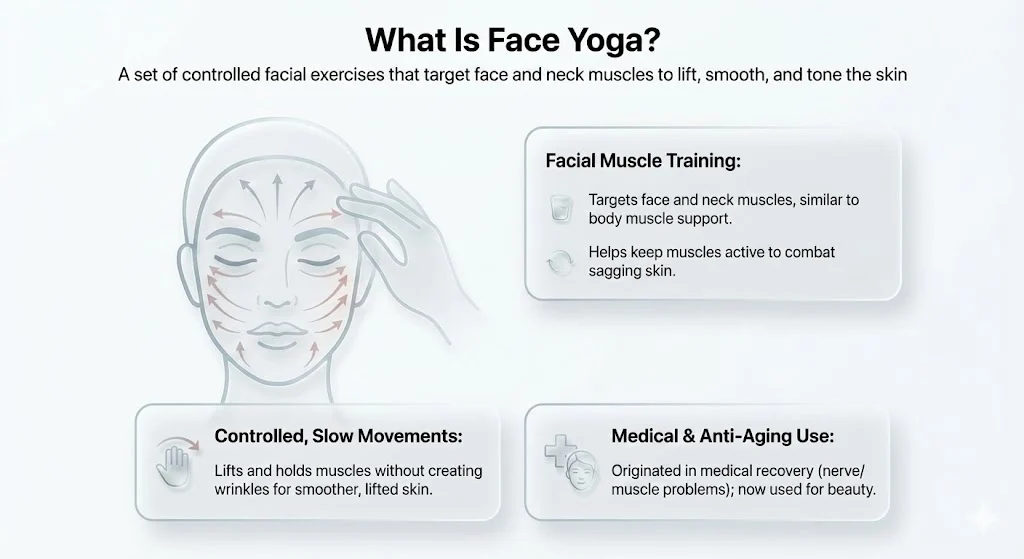
Face yoga is a group of facial movements and stretches that focus on the muscles of the face and neck. These muscles play a role in facial expressions and posture, similar to muscles in other parts of the body.
The exercises are performed slowly and with control. Many routines also include light massage and breathing techniques, which are often associated with relaxation and body awareness.
Today, face yoga is mainly practiced as part of beauty routines and general self-care. People use it as a mindful activity rather than a medical or cosmetic treatment.
Why Face Yoga Is Trending In 2026
Search interest for face yoga increased in early 2026 as more people looked for non-invasive wellness practices. Many individuals prefer routines that can be done at home without special equipment.
Short instructional videos on platforms like YouTube and Instagram have made face yoga easier to learn. Mobile apps also offer guided sessions that fit into daily schedules.
Some people combine face yoga with other personal care methods such as facial massage or skin care routines. This combination is often described as part of a holistic lifestyle approach.
5 Face Yoga Exercises That You Need
Below are examples of commonly shared face yoga movements. These are general practices meant for relaxation and facial muscle awareness.
| Exercise | How to perform | Purpose |
|---|---|---|
| Cheek lifter | Open mouth in an O shape. Gently smile and place fingers on cheeks. Repeat slowly | Encourages facial movement |
| Happy cheeks sculpting | Smile without showing teeth. Lightly lift cheeks with fingers and hold | Promotes muscle awareness |
| Eyebrow lifter | Place fingers under eyebrows and gently resist upward movement | Supports brow area movement |
| Jaw and neck stretch | Tilt head back slightly and hold for a few seconds | Releases jaw and neck tension |
| Forehead smoother | Sweep fingers outward across the forehead with light pressure | Helps relaxation |
How Long It Takes To Notice Changes
Experiences vary from person to person. Some people notice a difference in how their face feels after a few weeks of regular practice, while others may take longer.
Face yoga is generally viewed as a long-term self-care habit rather than a method with quick outcomes.
Consistency is often emphasized by practitioners, along with gentle movements and proper technique.
Is Face Yoga Safe?
Face yoga usually involves slow and light facial movements. Many people find it comfortable and easy to include in their routine.
It is generally recommended to avoid excessive pressure and to stop if any discomfort is felt. Individuals with specific concerns may choose to consult a qualified professional before starting new routines.
Face yoga is commonly practiced as a wellness and relaxation activity rather than a form of treatment.
Face Yoga And Lifestyle
Many people combine face yoga with healthy daily habits such as hydration, balanced nutrition, rest, and sun protection.
Face yoga does not replace skin care products or professional guidance. It is usually seen as a complementary self-care practice.
Some individuals use light oils or moisturizers during facial massage to improve comfort.
What Research Says About Face Yoga
Small studies have explored facial exercises and their possible effects on appearance and muscle engagement. Results vary and remain limited in scope.
Some findings suggest that facial movement may influence muscle tone, while other outcomes differ between individuals.
Researchers note that more large-scale studies are needed to understand long-term effects.
Face yoga is not considered a replacement for professional skin or medical care.
What People Are Sharing Online
Many users share their experiences with face yoga on social platforms. Some describe feeling more refreshed or relaxed after practicing regularly.
Others say the routine helps them build a mindful connection with their facial muscles.
Online discussions also show that experiences vary widely from person to person.
Mixed Opinions On Face Yoga
Some individuals feel face yoga makes little visible difference, while others enjoy it mainly for relaxation and self-care.
It is often viewed as a personal wellness choice rather than a guaranteed method for appearance change.
How Face Yoga Works
Face yoga involves repeated facial movements and gentle stretching. These actions encourage awareness of facial muscles.
Massage elements may help release tension in areas such as the jaw and forehead.
Many routines also focus on breathing and posture, contributing to overall relaxation.
Final Thoughts On Face Yoga
Face yoga is best understood as a gentle self-care activity rather than a solution for skin concerns.
Some people enjoy it for relaxation and facial awareness, while others may not notice significant changes.
As with many wellness trends, individual experiences differ. Practicing face yoga as part of a balanced lifestyle may help promote mindfulness and routine-based self-care.
Related Posts :
Share This Post