How To Achieve Flow State At Work : Boost Focus And Work Smarter
How To Achieve Flow State At Work : Boost Focus And Work Smarter
Flow state at work is the point where focus becomes natural and work feels lighter. Time moves fast. Tasks feel smooth. The mind stays on one goal without noise. Many professionals want this state because it brings high performance and calm energy at the same time.
In 2026, interest in flow state increased across remote teams, offices, creators, analysts and engineers. People link it with deep work, productivity, happiness and mental clarity. Flow is also seen as protection against distraction, burnout and digital overload in modern workplaces.
Table of Contents
Key takeaways On How To Achieve Flow State At Work
- Flow state is deep focus with loss of time sense and high control
- Balance of challenge and skill is the core trigger for flow
- Clear goals and instant feedback increase the chance of entering flow
- Removing interruptions helps protect cognitive energy and motivation
- Morning routines, coffee naps and binaural beats are rising focus trends in 2026
- Flow improves productivity, creativity, learning and job satisfaction
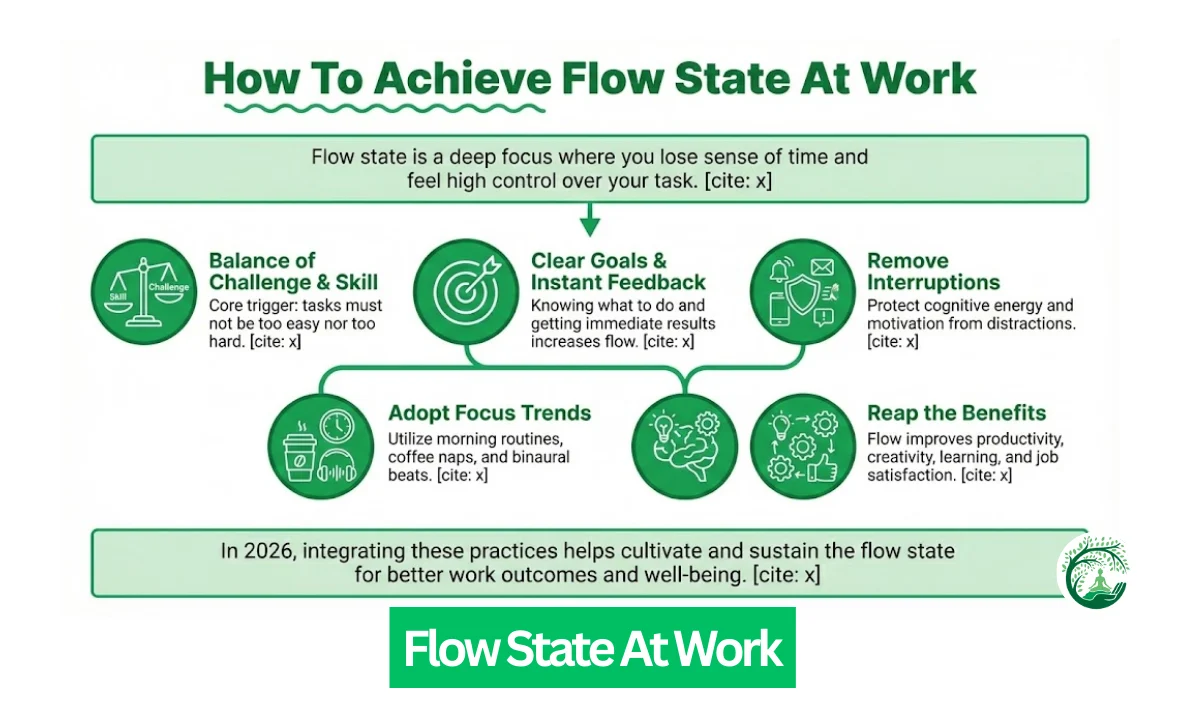
Flow state is not mystical. It is a psychological state where attention locks on the task. Action and awareness move together. Many workers experience it during coding, writing, design, analysis, sports or creative work. The concept was shaped by psychologist Mihaly Csikszentmihalyi. He linked flow with intrinsic motivation, meaning the work feels rewarding in itself.
What Is The Flow State At Work
Flow state at work is deep immersion in one task. Distractions fade. Self conscious thoughts reduce. The mind stays present. There is a sense of control. Output improves. Many report time distortion in flow. One hour can feel like ten minutes. This is common in knowledge work, creative roles and technical work.
Researchers describe core features of flow such as clear goals, focus, immediate feedback, challenge skill balance, loss of self awareness and intrinsic reward. Flow is not forced from outside. It grows inside when the work holds meaning and attention.
Also Read: How To Enter Flow State While Studying
Why Flow State Matters In Modern Workplaces
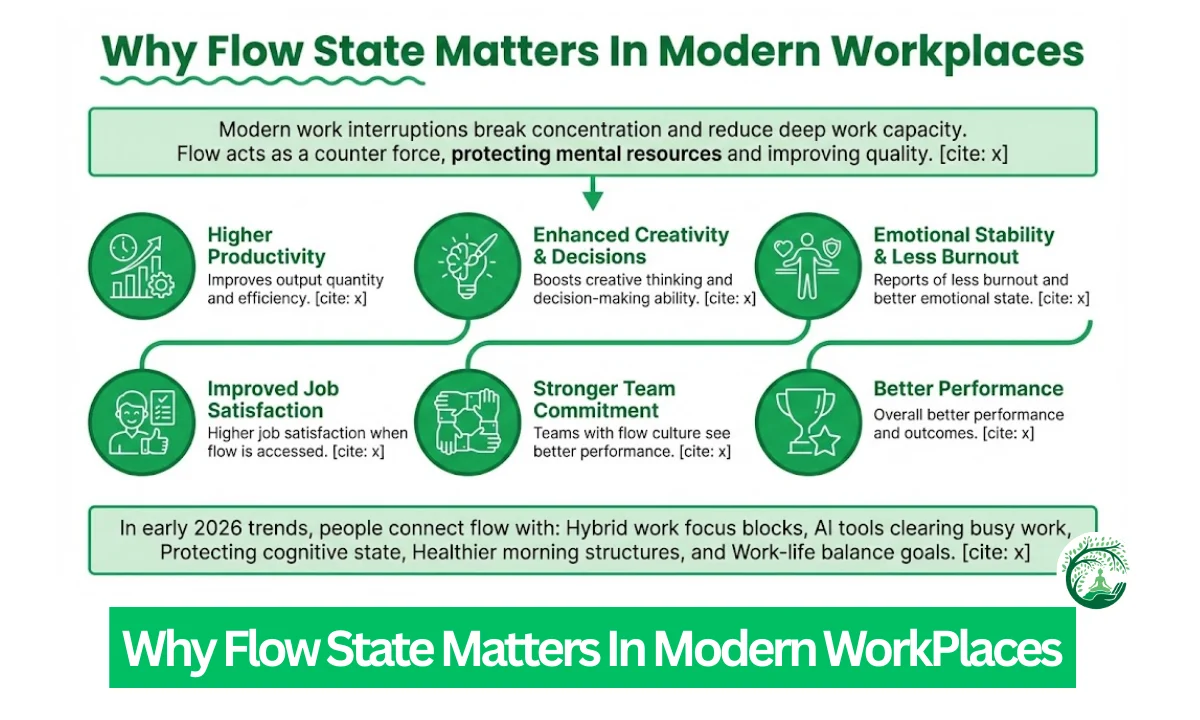
Work today comes with messages, alerts, meetings and constant switching. These break concentration. It often takes long recovery time after each small interruption. This reduces deep work capacity. Flow works as a counter force. It protects mental resources and improves output quality.
Benefits linked to flow at work include higher productivity, creativity, decision making ability, motivation and emotional stability. Many workers report less burnout and higher job satisfaction when they access flow more often. Teams that build flow culture see better performance and stronger commitment.
In early 2026 trends, people connect flow with:
- hybrid work focus blocks
- AI tools that clear busy work
- protecting cognitive state
- healthier morning structures
- work life balance goals
These trends show that flow is becoming part of normal performance systems in companies.
Flow state and deep work
Deep work refers to focus on complex cognitive tasks without distraction. Flow is the psychological experience during such focus. Both involve attention control. Deep work is about task style. Flow is about mental state. Many reach deep work without full flow. Flow is the higher state where effort feels light.
Key elements that trigger flow state at work
Flow does not appear randomly. It follows certain conditions. The most important is the balance between challenge and skill. If a task is too easy, boredom rises. If it is too hard, anxiety rises. Flow sits between both. The task stretches ability but still feels possible.
Other important elements include autonomy, purpose, competence and feedback. Clear goals help the brain stay on track. Immediate feedback helps correct action fast which keeps attention steady.
Listicle: Practical methods to reach flow state at work
- Pick one task that is important
- Set a clear, small goal for the next block of time
- Remove phone alerts and app notifications
- Block 60 to 90 minutes for single task deep work
- Match task difficulty slightly above current skill
- Use music without lyrics or binaural beats if it helps focus
- Start work after a short walk, stretch or morning routine
- Stop multitasking and avoid quick task switching
- Take a short break after each deep work block
- Choose tasks that feel meaningful or naturally interesting
These simple habits align with self determination theory. They support autonomy, competence and connection which are strong drivers of intrinsic motivation.
2026 public trends and opinions about flow state
Online discussions in early 2026 show rising attention toward flow state. People admire the feeling of losing time and staying fully immersed. Many describe it as a clean mental escape that supports happiness and progress. Comments highlight that interruptions break flow and recovery takes long.
Popular trends include:
- coffee naps before deep work
- gym plus sauna mornings followed by work sessions
- AI assistants that handle distractions or routine queries
- custom Pomodoro sites with focus music
- task batching instead of constant message checking
Workers share personal wins like faster completion, clearer thinking and more enjoyment at work after building focus rituals.
Role of workplace environment and leadership
Organisations play a strong role in flow. Workplaces that allow autonomy, quiet focus time and clear feedback support flow more often. Transformational leadership that builds trust, clarity and support helps employees stay focused. HR policies that reduce constant meetings and message pressure also help.
Team flow can also appear. It happens when shared goals are clear, interruptions are low and members feel control over their work. This improves project speed and collaboration quality.
Psychological and personal factors in achieving flow
Personal resources like confidence, optimism and emotional regulation make flow easier. People who build habits of concentration and mindful attention reach flow faster. Skills also matter. When skills are improved, task challenge can rise without anxiety. This keeps the flow channel open.
Intrinsic motivation is central. Work that feels meaningful or aligned with goals enters flow more easily than work seen as empty.
Practical techniques spreading in 2026
Several techniques gained popularity in 2026 discussions. These include:
- coffee naps where caffeine is consumed then a 20 minute nap follows
- binaural beats playlists for focus
- blocking Slack and email during deep work periods
- early morning work before digital noise begins
- fasting or meditation to clear mental clutter for some users
Many treat these as personal experiments rather than fixed rules. The common aim is the same. Protect attention. Prepare the mind. Enter flow sooner.
How to maintain flow once you reach it
Once flow begins, the key is to avoid breaking it. Keep notifications muted. Avoid checking unrelated tabs. Stick to the single task until a natural pause. Small interruptions can pull the brain out of flow and then recovery takes effort.
Short breaks between focus blocks refresh energy without losing rhythm. This protects mental stamina across the day.
Final outlook
Flow state at work is not rare and not only for elite performers. It is a natural human state when focus, challenge and meaning align. In the modern digital environment, intentional setup is needed. With clear goals, distraction control and the right level of challenge, most workers can experience flow regularly.
In 2026, flow is emerging as a core workplace advantage. It supports productivity, creativity and well being at the same time. It also helps balance work demands with mental health. Future workplaces that design for flow will likely see stronger results and happier employees.
Tags: flow state at work, deep work, productivity tips, workplace focus, mindfulness at work, employee wellbeing
Related Posts :





Share This Post