How To Deal With Emotional Eating And Stress Eating After Work: Practical Ways To Break The Cycle
How To Deal With Emotional Eating And Stress Eating After Work: Practical Ways To Break The Cycle
Emotional eating and stress eating after work has quietly become one of the most common struggles for working professionals today. Long hours, mental fatigue, deadlines, and emotional pressure often push people toward food as a quick way to unwind.
For many, the post work evening window becomes a routine of snacking, overeating, or craving comfort foods even without real hunger.
What makes emotional eating tricky is that it feels normal. After a tough day, food looks like relief. But over time, this habit can lead to guilt, weight changes, stalled health goals, and frustration. The good news is that dealing with emotional eating after work is possible when you understand why it happens and how to respond differently without self blame.
Key Takeaways
- Emotional eating after work is driven by stress, fatigue, and emotional overload, not real hunger
- Evening time is a high risk window for stress eating due to cortisol and mental exhaustion
- Awareness of triggers helps reduce impulsive snacking
- Small routine changes work better than strict food rules
- Compassion and consistency matter more than willpower
Understanding Emotional Eating And Stress Eating After Work
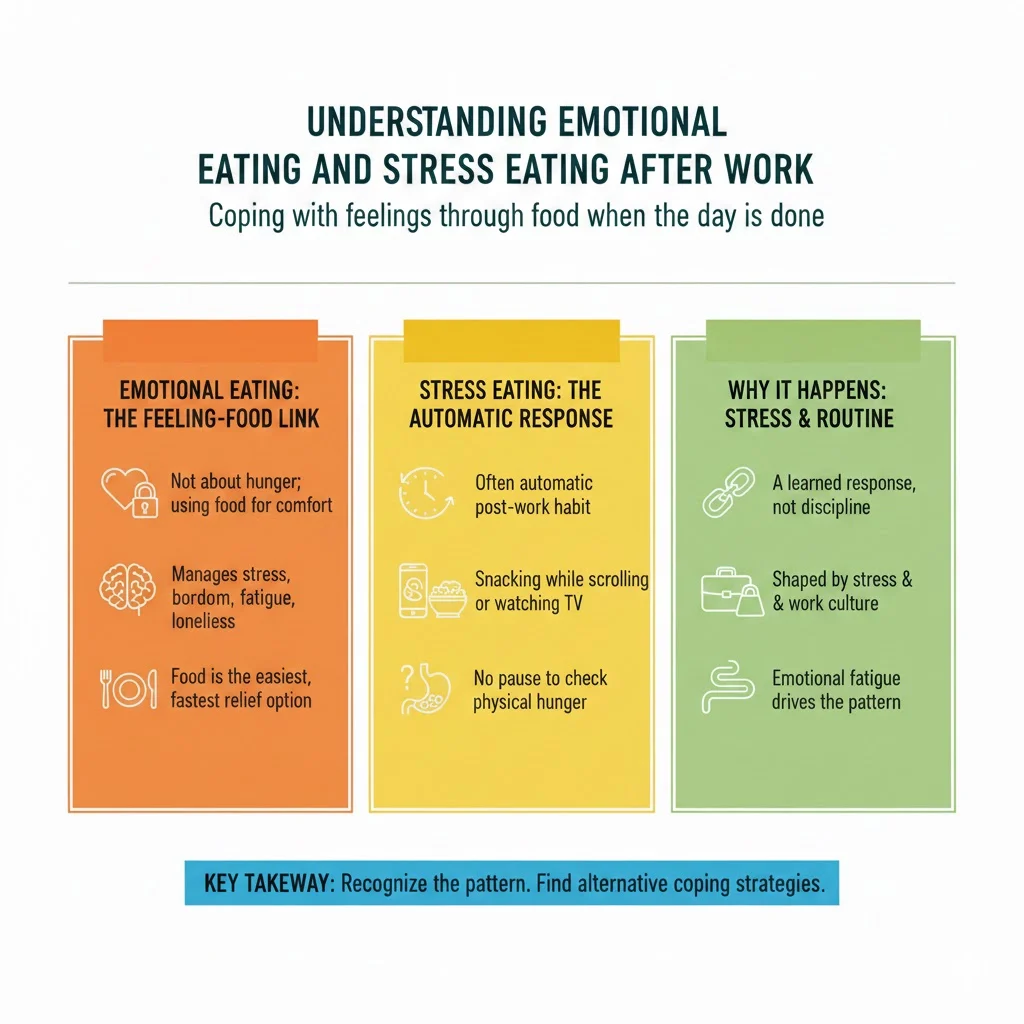
Emotional eating is not about food alone. It is about using food to manage feelings like stress, boredom, exhaustion, loneliness, or frustration. After work, the mind seeks comfort and the body wants relief. Food becomes the easiest option.
Stress eating after work often feels automatic. People reach for snacks while scrolling on their phone, watching shows, or decompressing. There is usually no pause to check hunger levels. The behavior becomes a habit linked to time, mood, and routine rather than physical need.
This pattern does not mean a lack of discipline. It is a learned response shaped by stress, work culture, and emotional fatigue.
Why The After Work Time Triggers Overeating
The post work period is emotionally loaded. Mental energy is low. Decision fatigue is high. Many people have spent the entire day controlling emotions, focusing, and meeting expectations.
Stress hormones like cortisol tend to stay elevated during long workdays. Higher cortisol levels are linked with stronger cravings for salty, sweet, and fried foods. This is why emotional eating after work often involves specific comfort foods rather than balanced meals.
Evening boredom also plays a role. When structure disappears after work, food fills the gap.
Emotional Hunger Vs Physical Hunger
Understanding the difference between emotional hunger and physical hunger helps break the cycle.
| Emotional Hunger | Physical Hunger |
|---|---|
| Comes suddenly | Builds gradually |
| Craves specific foods | Open to many foods |
| Feels urgent | Can wait |
| Continues after fullness | Stops when satisfied |
| Followed by guilt | No shame attached |
When hunger feels urgent and specific after a stressful day, it is often emotional rather than physical.
Common Triggers Behind Stress Eating After Work
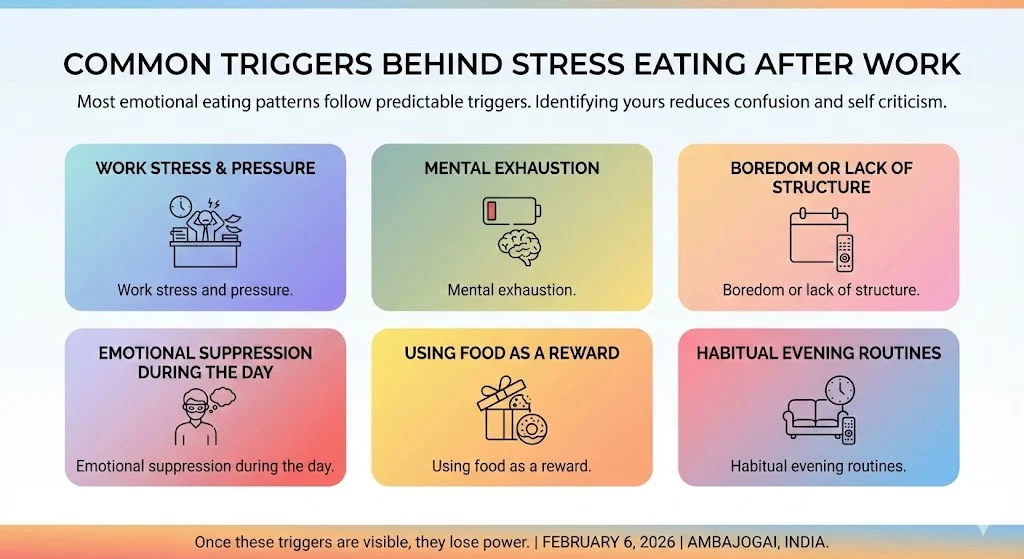
Most emotional eating patterns follow predictable triggers. Identifying yours reduces confusion and self criticism.
Common Emotional Eating Triggers
- Work stress and pressure
- Mental exhaustion
- Boredom or lack of structure
- Emotional suppression during the day
- Using food as a reward
- Habitual evening routines
Once these triggers are visible, they lose power.
What Public Opinion Says About Emotional Eating
Public conversations on X show that emotional eating after work is deeply relatable. Many people openly joke about stress snacking as a way to survive busy days. At the same time, there is growing self awareness around how often it happens and the emotional cost that follows.
People admire stories of those who broke the cycle through realistic changes rather than extreme diets. Posts celebrating progress often highlight better sleep, strength training, higher protein meals, quitting alcohol, and focusing on mental health first. Compassionate language receives stronger support than strict advice.
The dominant sentiment is clear. Emotional eating is common. Judgment does not help. Sustainable habits do.
How To Pause The Urge Without Fighting It
Cravings feel powerful because they are emotional, not because they are uncontrollable. The goal is not to block them but to slow them down.
A short pause helps create space between urge and action. Even waiting a few minutes can reduce intensity.
During the pause, ask simple questions.
Are you physically hungry.
Are you tired or stressed.
Do you need rest or comfort more than food.
This awareness alone often changes the outcome.
Building A Healthier After Work Routine
The body and mind need transition time after work. Without a transition, food becomes the default.
Simple Non Food Ways To Unwind
- Short walk or light movement
- Warm shower or tea
- Music or quiet time
- Journaling about the workday
- Deep breathing for a few minutes
These actions signal safety and relief without calories.
Eating Without Guilt When You Do Eat
Emotional eating becomes worse when followed by guilt. Guilt increases stress and leads to more cravings later.
Mindful eating reduces overeating naturally. Sitting down. Eating slowly. Not multitasking. Paying attention to fullness cues.
Eating with awareness is not restriction. It is respect for the body.
Choosing Satisfying Foods When Hunger Is Real
Sometimes hunger is real but mixed with emotion. In those moments, the goal is satisfaction rather than control.
Examples Of Balanced Evening Snacks
- Apple with nut butter
- Eggs with hummus
- Yogurt with seeds
- Protein rich meals that stabilize energy
Balanced foods reduce blood sugar spikes and emotional crashes.
Tracking Patterns Without Obsession
A simple food and mood journal can reveal patterns. Writing down what you eat and how you feel before and after brings clarity.
The goal is not calorie tracking. The goal is understanding behavior.
Over time, patterns become obvious. Certain days. Certain emotions. Certain routines.
Awareness leads to choice.
Reducing Stress At The Root Level
Stress eating cannot be solved only at dinner time. Daily stress management matters.
Sleep plays a major role. Poor sleep increases cravings. Movement improves mood and emotional regulation. Social connection reduces emotional reliance on food.
These habits support emotional stability which reduces cravings naturally.
When To Seek Extra Support
If emotional eating feels overwhelming or tied to deeper emotional struggles, professional guidance can help. Talking through emotional patterns builds healthier coping strategies.
Support is not weakness. It is skill building.
Final Thoughts
Dealing with emotional eating and stress eating after work is not about perfection. It is about understanding your mind and body with kindness. Food is not the enemy. Stress is the signal.
Small changes practiced consistently matter more than strict rules. When emotional needs are met in healthier ways, eating habits follow naturally.
Tags: emotional eating, stress eating after work, mindful eating habits, stress management, healthy evening routine, emotional hunger, weight management
Related Posts :

Share This Post