How To Maintain Gut Health Through Indian Fermented Foods: Grandma Approved Gut Health Secrets

How To Maintain Gut Health Through Indian Fermented Foods Grandma Approved Gut Health Secrets
Gut health has become one of the most discussed wellness topics in India over the last two years. People are slowly moving away from expensive supplements and processed solutions. There is a growing return to foods that have always existed in Indian kitchens. Fermented foods are now being recognised not as trends but as daily nutrition tools.
Traditional Indian fermented foods like curd, idli, dosa, chaas, kanji and fermented rice are being viewed as simple and effective ways to support digestion. These foods work with the body, not against it. They help restore balance in the gut and support long term health in a natural way.
Table of Contents
Key Takeaways
- Indian fermented foods support gut bacteria naturally
- Daily consumption helps reduce bloating and acidity
- These foods are affordable and easy to include
- Fermentation improves nutrient absorption
- Traditional food combinations act as probiotics and prebiotics
Why Gut Health Matters More Than Ever?
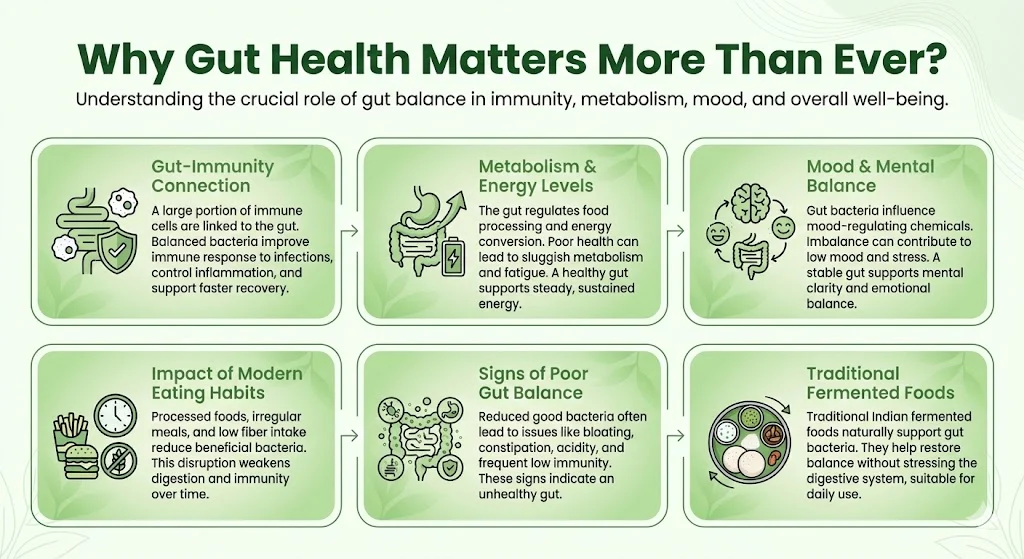
1. Direct link between gut and immunity: A large portion of immune cells are connected to the gut. When gut bacteria are balanced, the immune system responds better to infections. This balance also helps control inflammation and supports faster recovery.
2. Impact on metabolism and energy levels: The gut helps regulate how the body processes food and converts it into energy. Poor gut health often leads to sluggish metabolism and constant fatigue. A healthy gut supports steady energy throughout the day.
3. Connection with mood and mental balance: Gut bacteria influence chemicals that affect mood. An imbalanced gut can contribute to low mood and stress. A stable gut environment supports mental clarity and emotional balance.
4. Damage caused by modern eating habits: Processed foods, irregular meal timings and low fibre intake reduce beneficial bacteria. This disruption weakens digestion and immunity over time.
5. Common symptoms of poor gut balance: When good bacteria reduce, issues like bloating, constipation, acidity and low immunity become frequent. These signs often indicate an unhealthy gut.
6. Role of Indian fermented foods in restoring balance: Traditional fermented foods support gut bacteria naturally. They help restore balance without stressing the digestive system, making them suitable for daily consumption.
What Makes Fermented Foods Gut Friendly?
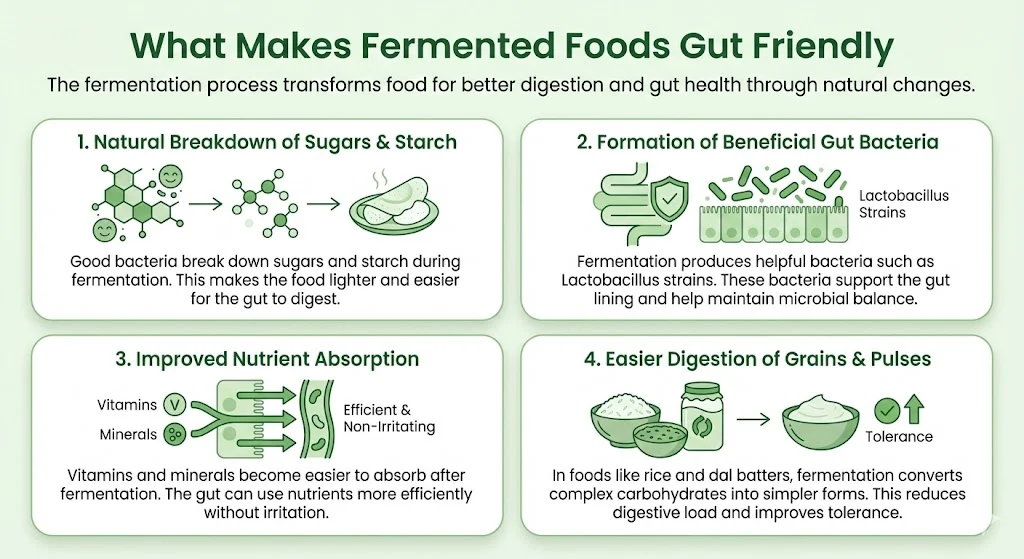
Fermented foods support gut health because of the changes that happen during the fermentation process.
1. Natural breakdown of sugars and starch: Good bacteria break down sugars and starch during fermentation. This makes the food lighter and easier for the gut to digest.
2. Formation of beneficial gut bacteria: Fermentation produces helpful bacteria such as Lactobacillus strains. These bacteria support the gut lining and help maintain microbial balance.
3. Improved nutrient absorption: Vitamins and minerals become easier to absorb after fermentation. The gut can use nutrients more efficiently without irritation.
4. Easier digestion of grains and pulses: In foods like rice and dal batters, fermentation converts complex carbohydrates into simpler forms. This reduces digestive load and improves tolerance.
The Revival of Indian Fermented Foods
During 2025 and 2026, India has seen a strong revival of fermented foods. Social media discussions and health articles highlight traditional foods as daily gut medicine. Many people compare their effectiveness with modern supplements and find them more reliable.
Seasonal foods like kanji in winters and chaas in summers are gaining popularity again. These foods support digestion, hydration and metabolism in a natural way. Their cultural relevance also makes them easier to adopt consistently.
Traditional Indian Fermented Foods That Support Gut Health
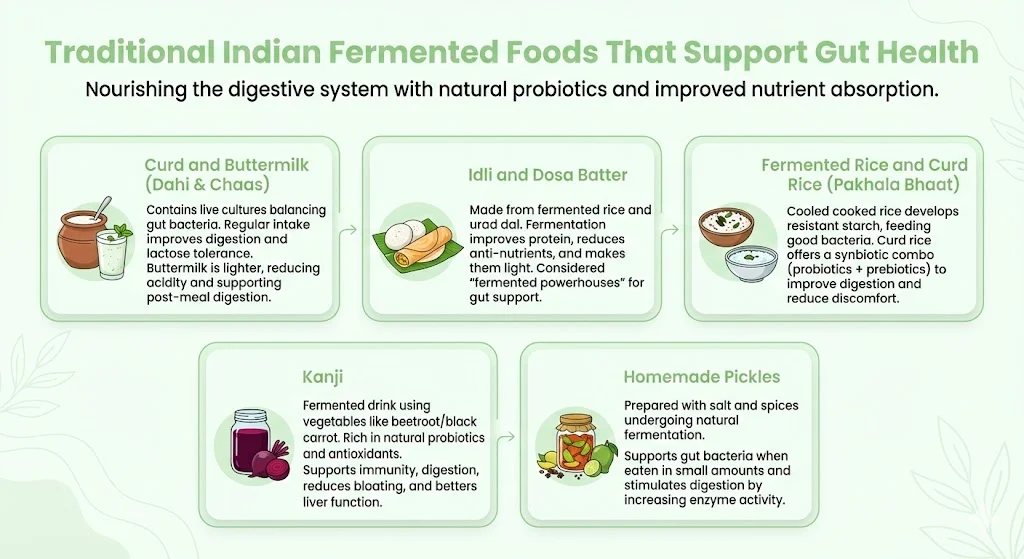
1) Curd and Buttermilk
Curd or dahi is one of the most common fermented foods in India. It contains live cultures that help balance gut bacteria. Regular consumption improves digestion and lactose tolerance.
Buttermilk or chaas is lighter than curd and easier on the stomach. It helps reduce acidity and supports digestion after meals. Many regions consume chaas daily for this reason.
2) Idli and Dosa Batter
Idli and dosa are made from fermented rice and urad dal batter. Fermentation improves protein quality and reduces anti nutrients. These foods are light and easy to digest.
People often refer to them as fermented powerhouses because they naturally support gut bacteria. The slow fermentation process makes nutrients more accessible and reduces digestive stress.
3) Fermented Rice and Curd Rice
Fermented rice dishes like curd rice and pakhala bhaat are considered gut healing foods. When cooked rice is cooled, it develops resistant starch. This starch feeds good gut bacteria.
Curd rice combines probiotics from curd and prebiotics from rice. This synbiotic combination improves digestion and reduces discomfort. Pakhala bhaat follows a similar principle and is widely praised for gut support.
4) Kanji
Kanji is a fermented drink made using vegetables like beetroot or black carrot. It is rich in natural probiotics and antioxidants. People consume it during winters and monsoons for immunity and digestion.
Beetroot kanji is often linked with reduced bloating and better liver function. Its fermentation process enhances nutrient absorption and supports gut diversity.
5) Homemade Pickles
Traditional pickles prepared using salt and spices undergo natural fermentation. These pickles support gut bacteria when consumed in small amounts.
They also stimulate digestion by increasing enzyme activity. Homemade versions are preferred as they retain live cultures.
Also Read: Yoga Asanas for Digestion: 8 Yoga Poses That Heal Your Gut
How Fermented Foods Improve Digestion?
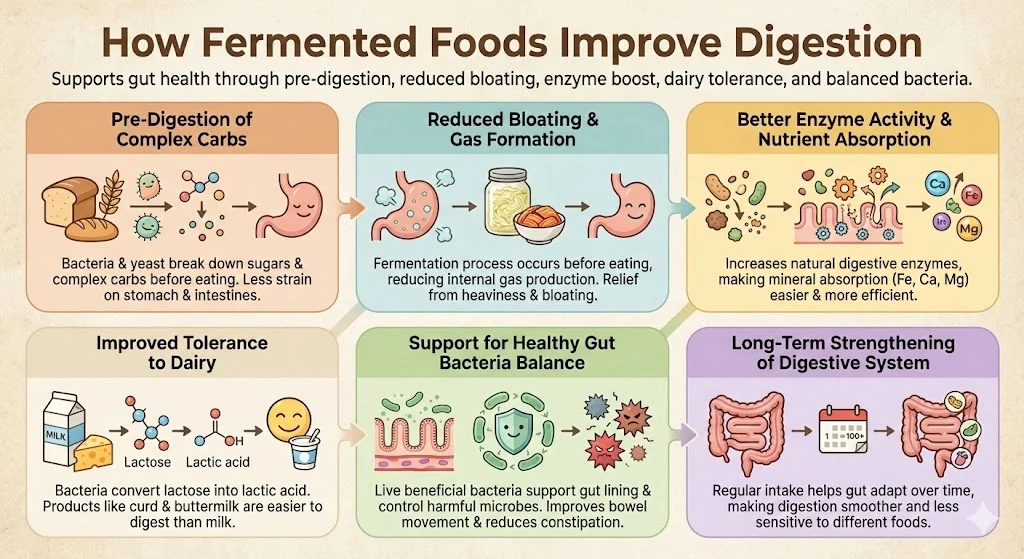
Fermented foods support digestion by preparing food in a way that makes it easier for the gut to process. The benefits come from multiple stages of fermentation and their direct impact on the digestive system.
1. Pre digestion of complex carbohydrates: During fermentation, natural bacteria and yeast feed on sugars and complex carbohydrates. These compounds are broken down into simpler forms before the food is eaten. Because part of the digestion happens outside the body, the stomach and intestines face less strain after meals.
2. Reduced bloating and gas formation: Many digestive issues come from undigested carbohydrates fermenting inside the gut. Fermented foods already undergo this process during preparation. As a result, there is less internal gas production. People who feel heaviness or bloating after eating often notice relief when fermented foods are included regularly.
3. Better enzyme activity and nutrient absorption: Fermentation increases the presence of natural digestive enzymes. These enzymes help the body absorb nutrients efficiently. Minerals such as iron, calcium, and magnesium become easier to absorb because fermentation lowers compounds that block absorption. This allows the gut to take in nutrients without irritation.
4. Improved tolerance to dairy: In fermented dairy products, bacteria convert lactose into lactic acid. Lactose is the sugar responsible for discomfort in lactose intolerance. Since most of the lactose is already broken down, foods like curd and buttermilk are easier to digest than milk.
5. Support for healthy gut bacteria balance: Fermented foods contain live beneficial bacteria that support the gut lining. These bacteria help control harmful microbes and maintain balance in the digestive system. A healthy balance improves bowel movement and reduces constipation.
6. Long term strengthening of the digestive system: Regular intake of fermented foods helps the gut adapt over time. Digestion becomes smoother and the gut becomes less sensitive to different foods. This is why traditional diets relied on fermentation as a daily digestive support rather than medicine.
Gut Health Benefits Beyond Digestion
A balanced gut microbiome supports immunity and reduces inflammation. Fermented foods help maintain this balance. People with IBS and metabolic issues often see improvement with consistent intake.
Gut bacteria also influence mental health through the gut brain connection. Healthy bacteria support neurotransmitter production and improve overall well being.
Indian Fermented Foods as Synbiotics
Many Indian food combinations naturally act as synbiotics. Probiotics from fermented foods and prebiotics from fibre rich ingredients work together.
Curd rice, idli with sambar and kanji with vegetables are good examples. These combinations feed existing gut bacteria and help new bacteria survive stomach acid.
Simple Ways to Include Fermented Foods Daily
Daily inclusion is more effective than occasional consumption. Small portions are enough to support gut health.
Common habits include curd after meals, idli or dosa for breakfast and chaas during lunch. Seasonal drinks like kanji can be added a few times a week.
Homemade versions are recommended as they contain live cultures. Store bought products may lose probiotic value during processing.
Scientific Support and Safety
Recent discussions highlight support from food authorities for probiotic claims in fermented foods. Fermentation improves nutrient bioavailability and gut compatibility.
These foods are safe for daily use when prepared hygienically. They have been part of Indian diets for generations without adverse effects.
Why Indian Fermented Foods Work Better Than Supplements
Supplements often struggle to survive stomach acid. Fermented foods come with natural buffers and fibres that protect bacteria.
They also provide nutrients and hydration along with probiotics. This makes them more sustainable and effective for long term gut health.
Final Thoughts
Indian fermented foods are simple and powerful tools for maintaining gut health. They are affordable, culturally rooted and backed by both tradition and science.
Regular consumption supports digestion, immunity and overall wellness. These foods prove that strong gut health does not require complexity. It requires consistency and respect for traditional wisdom.
Tags: gut health, Indian fermented foods, probiotics, digestion health, traditional Indian diet, fermented foods India
Related Posts :






Share This Post