South Indian Keto Diet Plan Vegetarian: 7 Day Meal Chart With Easy Low Carb Recipes
South Indian Keto Diet Plan Vegetarian: 7 Day Meal Chart With Easy Low Carb Recipes
The South Indian keto diet plan vegetarian is gaining attention among people who want to follow a low carb lifestyle without giving up traditional flavors. This approach adapts familiar foods like coconut, spices, paneer, and vegetables into a keto-friendly format. The main goal is to reduce rice and lentils while increasing healthy fats and moderate protein from vegetarian sources.
Many people believe a South Indian vegetarian keto diet is difficult because meals depend heavily on idli, dosa, rice, and sambar. But recent recipe trends show that with small ingredient changes, it is possible to enjoy the same taste profile while keeping carbohydrates low. This plan focuses on cauliflower rice, coconut-based gravies, paneer dishes, and low carb vegetables to create balanced and satisfying meals.
Key Takeaways
- South Indian vegetarian keto is challenging but achievable with smart substitutions.
- Coconut, ghee, paneer, tofu, and vegetables form the base of this diet.
- Traditional dishes can be modified into keto-friendly versions.
- Public opinion supports creativity and flexibility for long-term success.
- A structured 7 day meal plan helps beginners stay consistent.
Also Read: The Ultimate Superfoods Guide: Spirulina, Moringa, Berries & More for Insane Overall Health
What Is A South Indian Vegetarian Keto Diet?
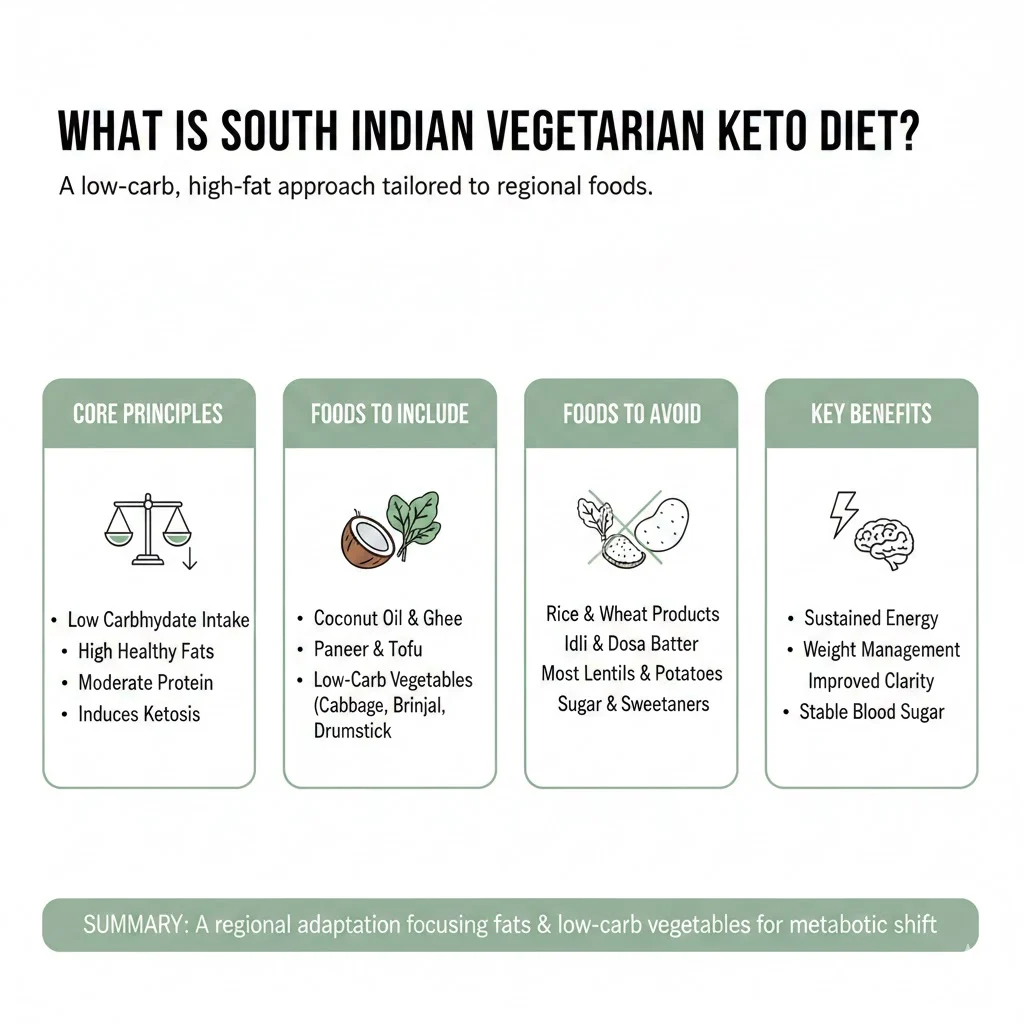
The South Indian vegetarian keto diet is a low carbohydrate and high fat eating pattern adapted to regional food habits. It removes rice, wheat, and most lentils. It replaces them with healthy fats and low carb vegetables.
In this diet, the body shifts from using glucose to using fat as the main energy source. This process is called ketosis. Meals depend on coconut oil, ghee, paneer, tofu, nuts, seeds, and vegetables like brinjal, drumstick, spinach, and cabbage.
Unlike a regular South Indian diet, this plan avoids idli, dosa batter made from rice, and potato-based curries. Instead, it uses almond flour, coconut flour, and cauliflower to prepare similar dishes with fewer carbs.
Why South Indian Keto Is Different From Regular Keto?
South Indian keto has a unique identity because of its spice profile and cooking methods. Coconut and curry leaves play an important role. Sambar powder, mustard seeds, and turmeric are naturally keto-friendly when used without lentils or sugar.
This version is mostly lacto-vegetarian. It uses paneer, curd, and full-fat dairy. Egg-free options are also possible. The main difference is that it avoids meat and fish while still meeting fat and protein needs through plant and dairy sources.
People prefer this approach because it keeps cultural comfort foods alive in a modified form. It does not feel like switching to a foreign diet style.
Foods To Include In A South Indian Vegetarian Keto Diet
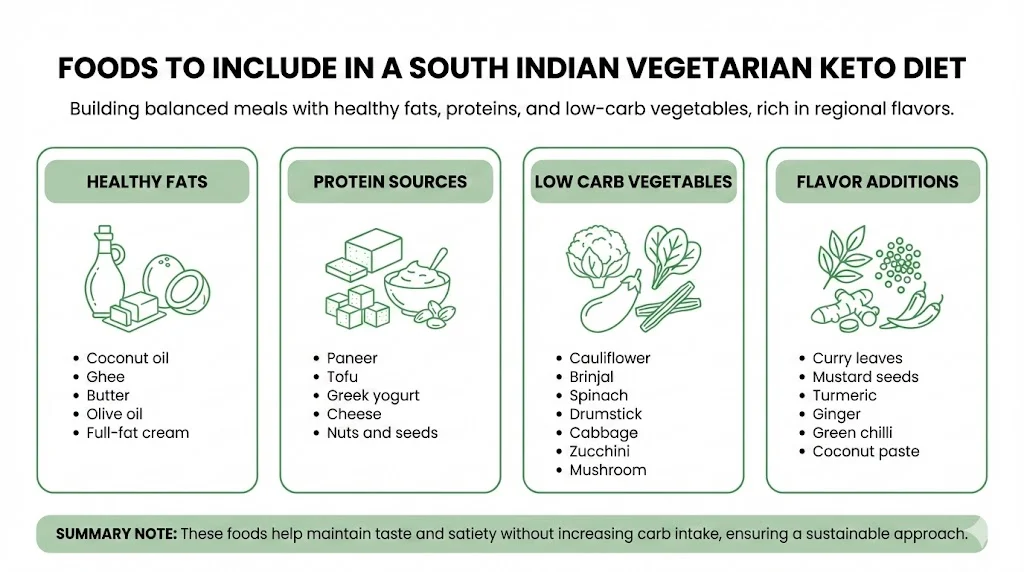
Healthy Fats
- Coconut oil
- Ghee
- Butter
- Olive oil
- Full-fat cream
Protein Sources
- Paneer
- Tofu
- Greek yogurt
- Cheese
- Nuts and seeds
Low Carb Vegetables
- Cauliflower
- Brinjal
- Spinach
- Drumstick
- Cabbage
- Zucchini
- Mushroom
Flavor Additions
- Curry leaves
- Mustard seeds
- Turmeric
- Ginger
- Green chilli
- Coconut paste
These foods help maintain taste and satiety without increasing carb intake.
Foods To Avoid In This Diet
- Rice and wheat products
- Idli and dosa batter made from rice and lentils
- Potatoes and sweet potatoes
- Sugar and jaggery
- High sugar fruits like banana and mango
- Packaged snacks and fried items
Avoiding these foods helps the body stay in ketosis and prevents carb overload.
7 Day South Indian Keto Diet Plan Vegetarian
The table below shows a simple meal plan designed for beginners.
| Day | Breakfast | Lunch | Dinner |
|---|---|---|---|
| Day 1 | Coconut chia pudding | Paneer curry with cauliflower rice | Mushroom soup |
| Day 2 | Keto dosa with coconut chutney | Palak paneer | Vegetable stir fry |
| Day 3 | Greek yogurt with seeds | Brinjal coconut curry | Spinach soup |
| Day 4 | Almond flour uttapam | Paneer tikka salad | Zucchini curry |
| Day 5 | Bullet coffee | Cauliflower upma | Tofu masala |
| Day 6 | Avocado smoothie | Mixed veg coconut curry | Paneer bhurji |
| Day 7 | Keto idli | Cabbage poriyal with paneer | Tomato soup |
Snacks can include nuts, seeds, or cheese cubes in small portions.
Popular Keto South Indian Recipe Ideas
People enjoy creating keto versions of familiar dishes. Some common examples include:
- Cauliflower rice instead of plain rice
- Almond flour dosa instead of regular dosa
- Keto sambar using vegetables and coconut paste
- Coconut chutney without sugar
- Paneer and mushroom gravies with ghee
These recipes keep the spicy and tangy taste of South Indian food alive.
Public Opinion On South Indian Vegetarian Keto Diet
Public discussions show mixed but hopeful reactions. Many people say this diet feels restrictive because South Indian meals depend heavily on rice and lentils. Some express frustration that daily food options become limited and repetitive.
At the same time, there is admiration for creative adaptations. People share success stories of weight management and improved energy. Social platforms highlight recipes like keto idli, keto dosa, and cauliflower poha as beginner-friendly options.
Common challenges mentioned include hunger in the early days, social pressure at home, and boredom from eating paneer frequently. Enthusiasts suggest using coconut-based gravies and vegetables to add variety. There is also growing interest in flexible or lazy keto styles for sustainability.
Overall sentiment shows that the diet is tough but achievable. Many believe that small changes make it practical without losing traditional taste.
Benefits Of Following This Diet
- Helps reduce carb intake while keeping meals satisfying
- Supports weight management when followed carefully
- Uses familiar ingredients and spices
- Can improve food awareness and portion control
- Encourages home cooking and planning
These benefits depend on consistency and balanced food choices.
Challenges And Precautions
South Indian vegetarian keto is not easy for everyone. Some people face problems like low fiber intake and fatigue in the beginning. Nutrient balance can become an issue if meals rely only on paneer and fats.
It is important to drink enough water and include vegetables for fiber. People with health conditions should seek professional advice before starting this plan.
Tips For Long Term Success
Here is a simple listicle of practical tips:
- Start slowly and reduce rice step by step.
- Use coconut oil and ghee to increase fat intake naturally.
- Plan meals in advance to avoid confusion.
- Try different vegetables to avoid boredom.
- Keep recipes simple and repeatable.
- Listen to your body and adjust portions.
- Focus on consistency instead of perfection.
These habits help maintain the diet without stress.
How To Adapt Traditional South Indian Dishes?
Traditional recipes can be adjusted with small changes:
- Replace rice with cauliflower or cabbage rice.
- Replace lentils with coconut paste or tofu in gravies.
- Use almond or coconut flour for dosa and uttapam.
- Avoid sugar and add spices for flavor instead.
This method preserves cultural identity while supporting low carb eating.
Final Thoughts South Indian Keto Diet
The South Indian keto diet plan vegetarian is a creative blend of tradition and modern nutrition ideas. It shows that low carb eating does not mean giving up cultural food habits. With coconut-based gravies, paneer dishes, and vegetable curries, this diet becomes practical and enjoyable.
Public opinion highlights both struggles and success. People agree that it needs patience and experimentation. Those who adapt slowly and keep recipes simple find it more sustainable. This plan works best when treated as a lifestyle adjustment rather than a short-term fix.
Tags: South Indian keto diet, vegetarian keto meal plan, low carb Indian food, keto recipes South India, cauliflower rice, paneer keto dishes, healthy diet plan
Related Posts :

Share This Post