The Ultimate Superfoods Guide: Spirulina, Moringa, Berries & More for Insane Overall Health
The Ultimate Superfoods Guide: Spirulina, Moringa, Berries & More for Insane Overall Health
The idea of superfoods has grown beyond a simple nutrition trend. In 2025 and 2026, people are choosing foods that support digestion, brain health, immunity, and long life. This shift is closely linked with the rising focus on fiber intake, gut balance, and natural anti-inflammatory foods. Superfoods are now part of daily meals instead of rare health supplements.
These foods are valued because they offer antioxidants, plant protein, minerals, and compounds that protect the body from stress and disease. Spirulina, moringa, berries, seeds, mushrooms, and spices are now seen as tools for steady energy and overall wellness without extreme diets.
Table of Contents
Key Takeaways
- Superfoods are nutrient-dense foods that support gut health, brain function, and immunity.
- Fiber-rich foods are trending for metabolic control and long-term wellness.
- Combining different superfoods improves results through nutrient synergy.
- Moderation is important due to individual tolerance and digestion differences.
- Superfoods work best as part of normal meals, not as replacements for whole diets.
What Makes a Food a Superfood?
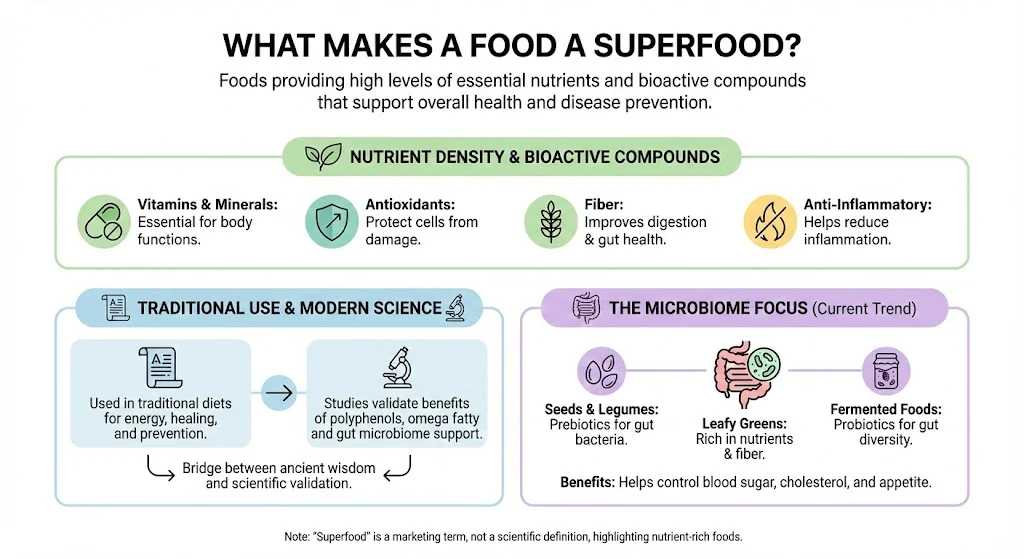
Superfoods are not defined by law or science standards. The term is used for foods that provide high levels of vitamins, minerals, antioxidants, and fiber. These foods help reduce inflammation, improve digestion, and protect cells from damage.
Many superfoods come from traditional diets. They were used for energy, healing, and disease prevention. Today, research supports many of these benefits through studies on antioxidants, polyphenols, omega fatty acids, and gut bacteria.
In recent years, interest has shifted toward foods that improve the microbiome. This includes seeds, legumes, leafy greens, and fermented items. These foods help control blood sugar, cholesterol, and appetite.
Core Superfoods for Overall Health
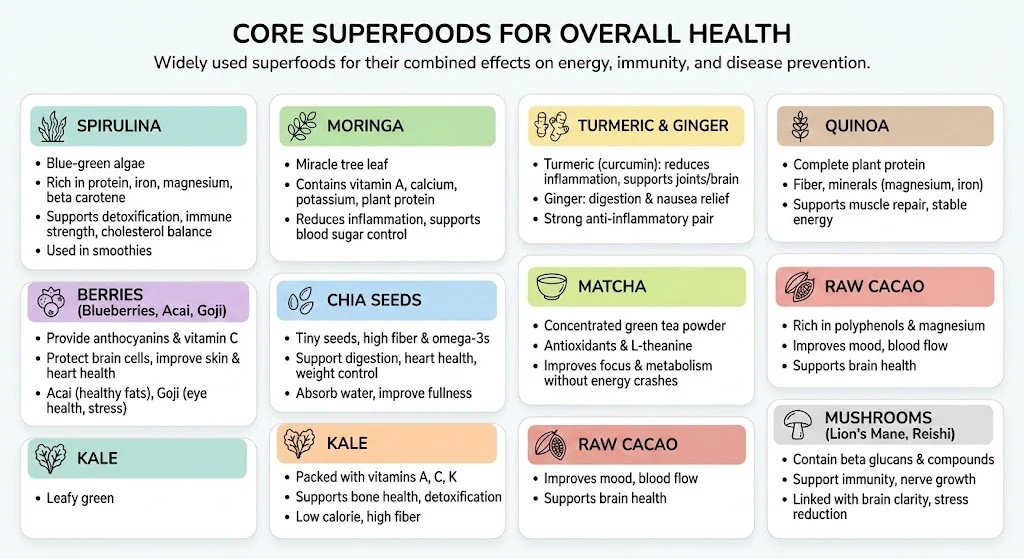
These superfoods are widely used for their combined effects on energy levels, immune defense, digestion, and long term disease prevention. Each one offers unique nutrients that support different systems of the body. When included regularly in meals, they help build a strong nutritional foundation.
1) Spirulina
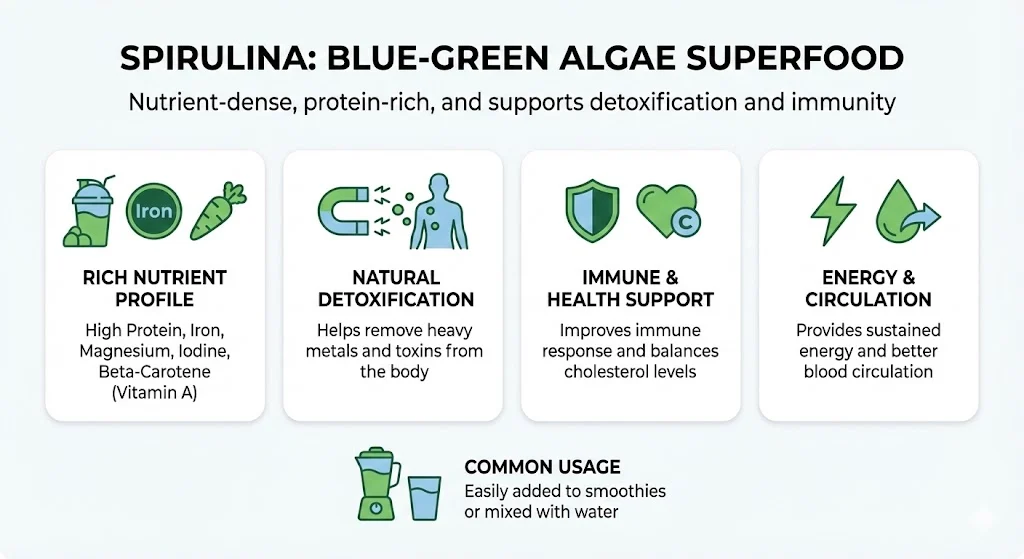
Spirulina is a blue green algae known for its high protein content and rich mineral profile. It contains iron, magnesium, iodine, and beta carotene which converts into vitamin A in the body. Spirulina supports natural detoxification by helping remove heavy metals and toxins.
It also improves immune response and helps balance cholesterol levels. Many people use it for sustained energy and better blood circulation. It is commonly added to smoothies or mixed with water.
2) Moringa
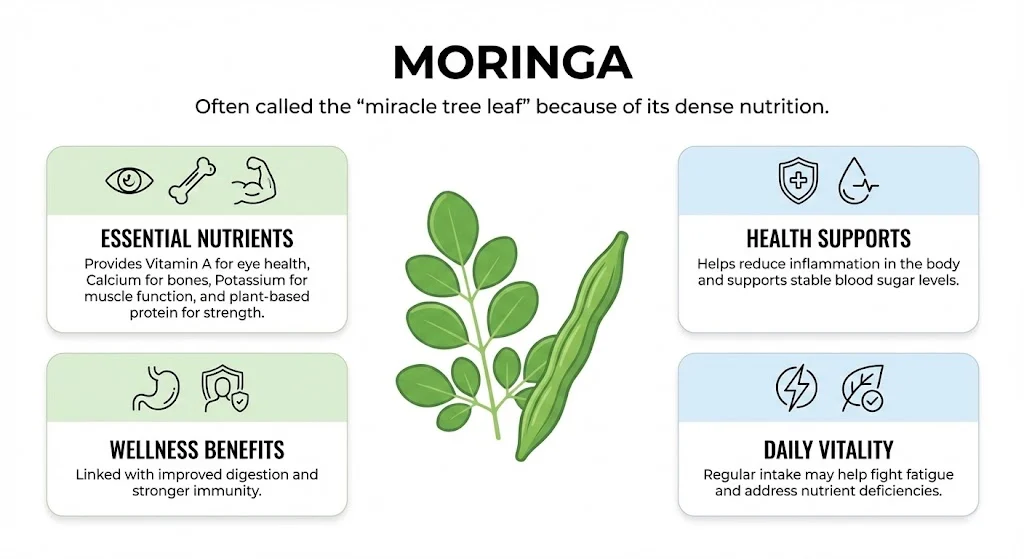
Moringa is often called the miracle tree leaf because of its dense nutrition. It provides vitamin A for eye health, calcium for bones, potassium for muscle function, and plant based protein for strength.
Moringa helps reduce inflammation in the body and supports stable blood sugar levels. It is also linked with improved digestion and stronger immunity. Regular intake may help fight fatigue and nutrient deficiencies.
3) Berries (Blueberries, Acai, Goji)
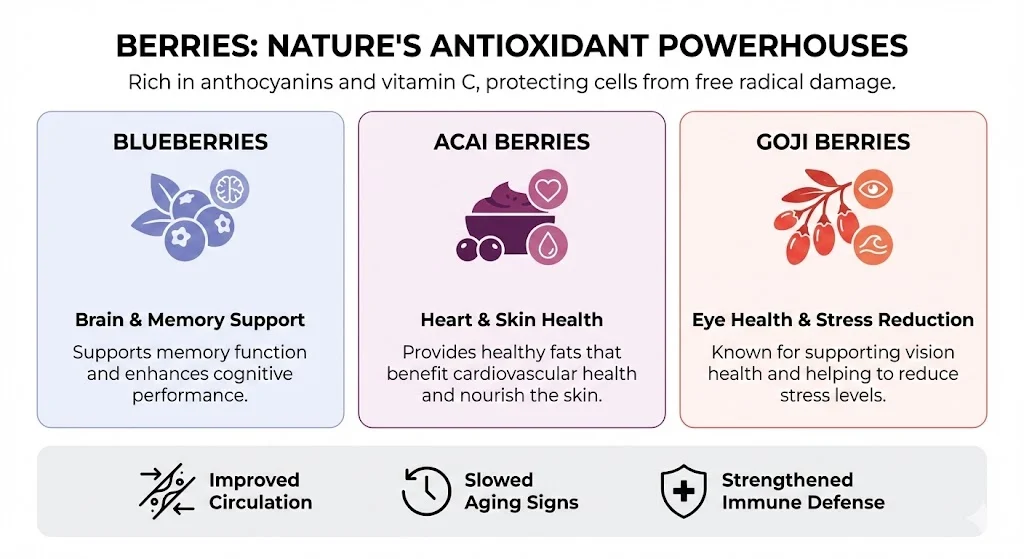
Berries are rich in antioxidants such as anthocyanins and vitamin C. These compounds protect cells from damage caused by free radicals.
Blueberries support memory and brain performance. Acai berries provide healthy fats that benefit the heart and skin. Goji berries are known for supporting eye health and reducing stress. Together, berries help improve circulation, slow aging signs, and strengthen immune defense.
4) Chia Seeds
now do create image on “Chia Seeds” use modern graphics and keep the design format minimal
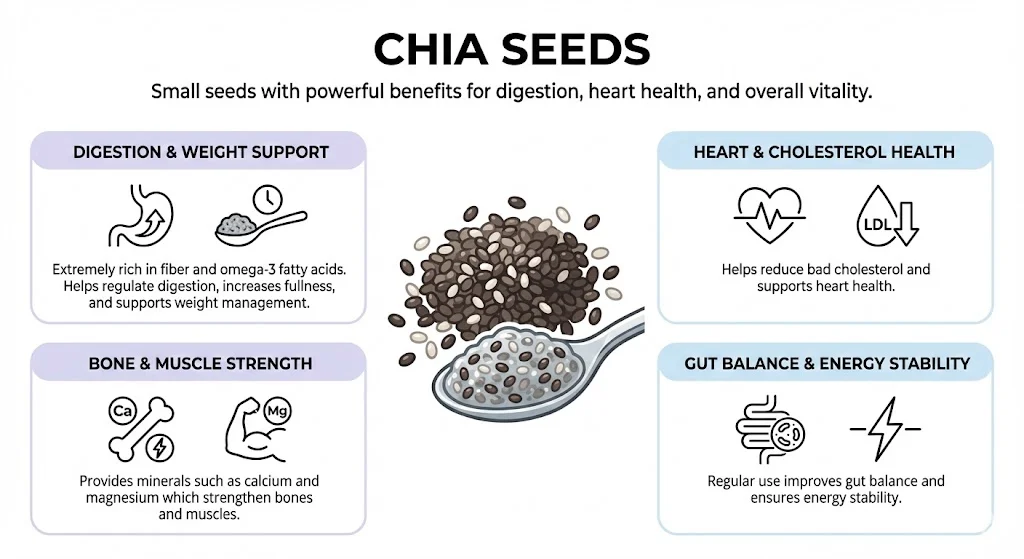
Chia seeds are small but extremely rich in fiber and omega 3 fatty acids. They help regulate digestion and keep bowel movement healthy.
Their gel forming ability increases fullness and supports weight management. Chia seeds also help reduce bad cholesterol and support heart health. They provide minerals such as calcium and magnesium which strengthen bones and muscles. Regular use improves gut balance and energy stability.
5) Kale
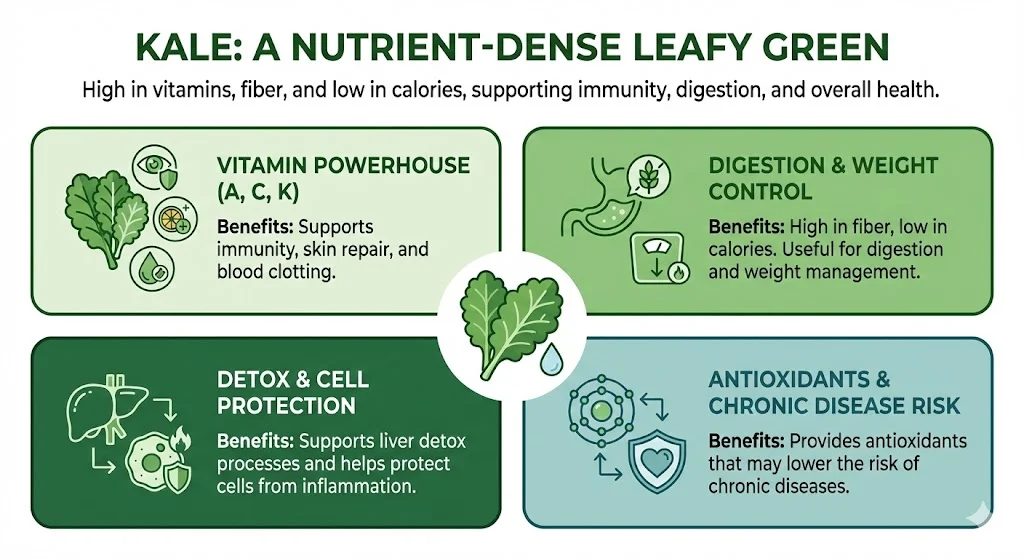
Kale is one of the most nutrient dense leafy greens. It contains vitamins A, C, and K which support immunity, skin repair, and blood clotting.
Kale is high in fiber and low in calories which makes it useful for digestion and weight control. It supports liver detox processes and helps protect cells from inflammation. Kale also provides antioxidants that may lower the risk of chronic diseases.
Also Read: 50 Best Essential Oils & Their Use Case
6) Turmeric and Ginger
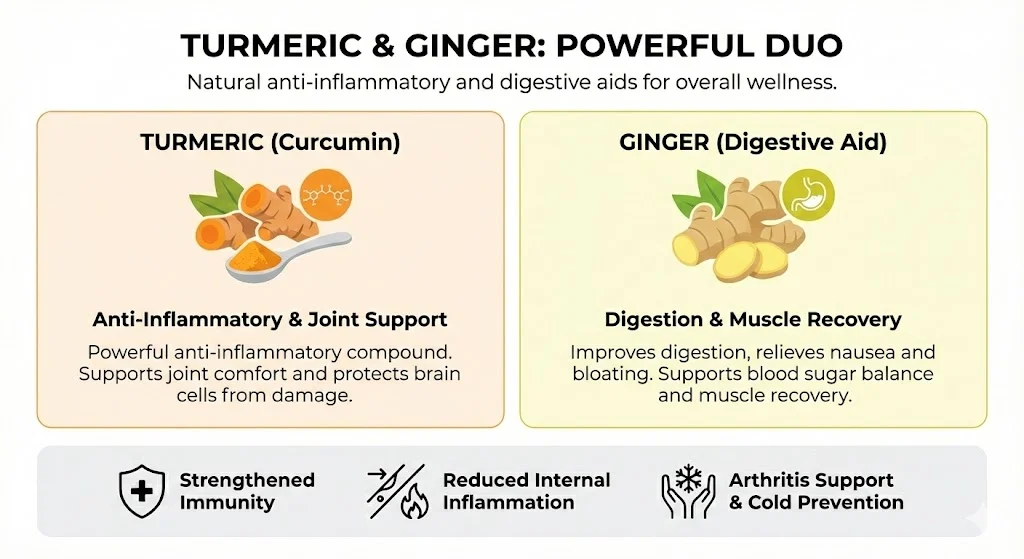
Turmeric contains curcumin which is a powerful anti-inflammatory compound. It supports joint comfort and protects brain cells from damage.
Ginger improves digestion and helps relieve nausea and bloating. It also supports blood sugar balance and muscle recovery. When used together, turmeric and ginger strengthen immunity and reduce internal inflammation. This combination is widely used for arthritis support and cold prevention.
7) Quinoa
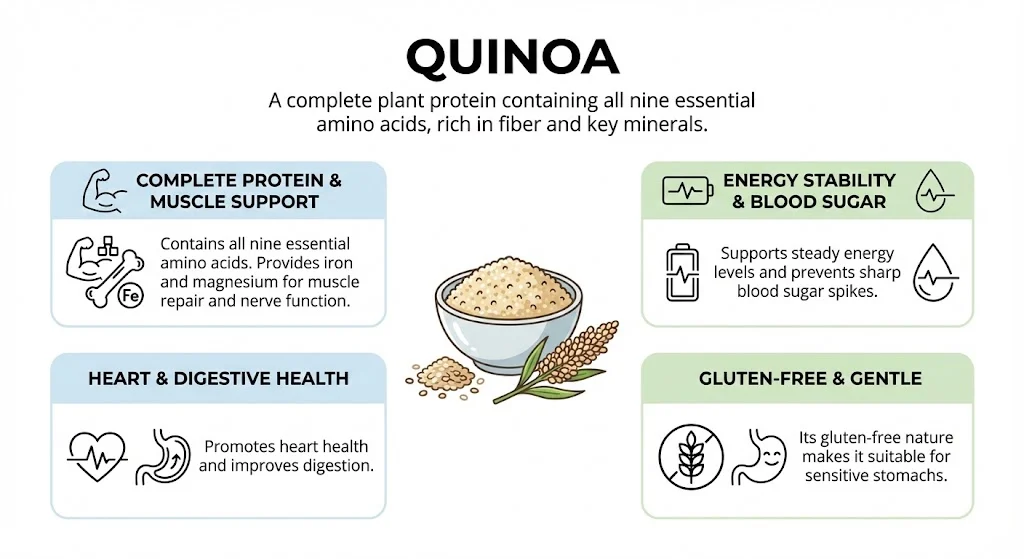
Quinoa is a complete plant protein that contains all nine essential amino acids. It provides fiber and minerals such as iron and magnesium which help muscle repair and nerve function.
Quinoa supports steady energy levels and prevents sharp blood sugar spikes. It also promotes heart health and improves digestion. Its gluten free nature makes it suitable for sensitive stomachs.
Also Read: Foods Commonly Associated With Healthy Hair And Overall Nutrition
8) Matcha
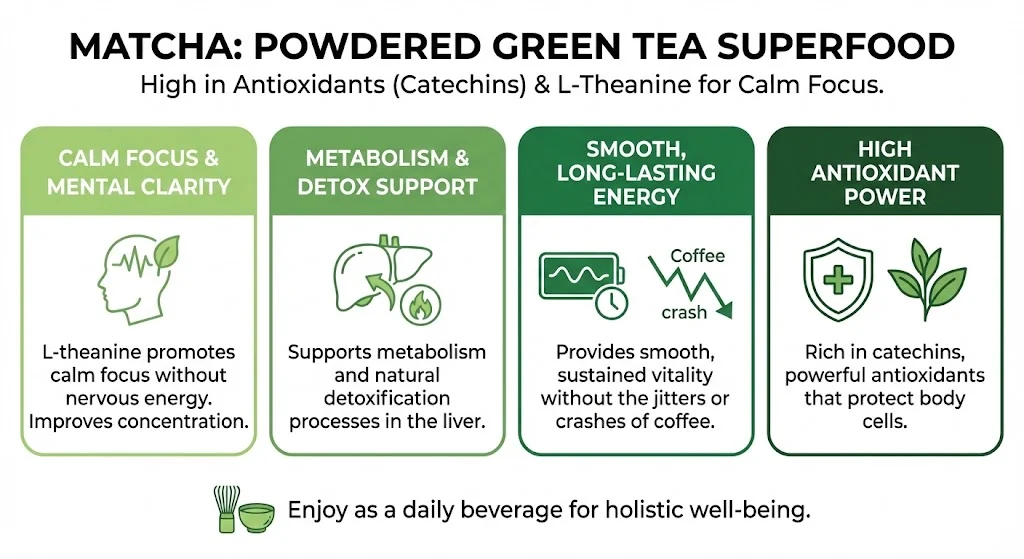
Matcha is powdered green tea that contains high levels of antioxidants called catechins. It also contains L theanine which promotes calm focus without nervous energy.
Matcha supports metabolism and detoxification processes in the liver. It improves concentration and mental clarity. Unlike coffee, it provides smooth and long lasting energy without crashes.
9) Raw Cacao
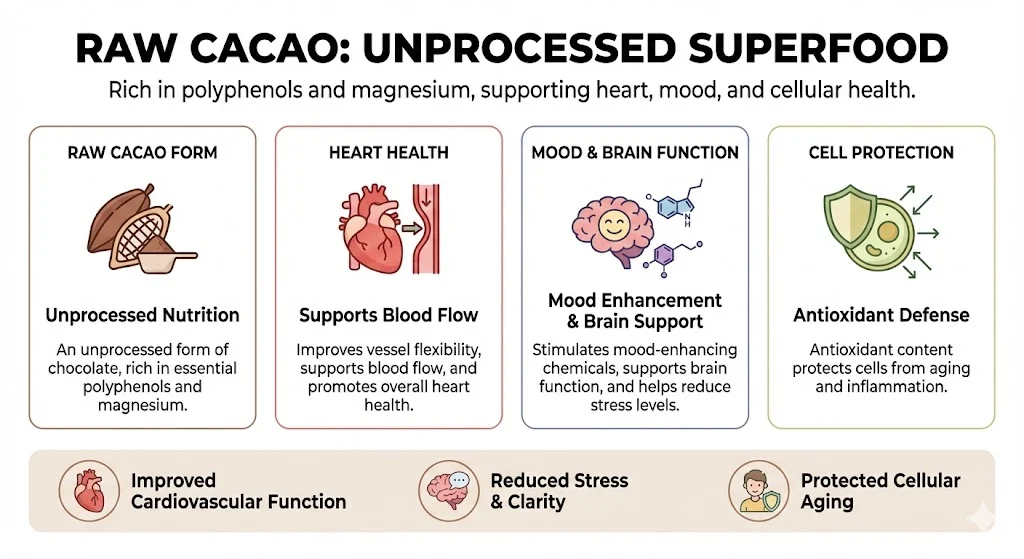
Raw cacao is an unprocessed form of chocolate rich in polyphenols and magnesium. It supports blood flow and heart health by improving vessel flexibility.
Cacao stimulates mood enhancing chemicals such as serotonin and dopamine. It also supports brain function and reduces stress levels. Its antioxidant content protects cells from aging and inflammation.
10) Mushrooms (Lion’s Mane, Reishi)
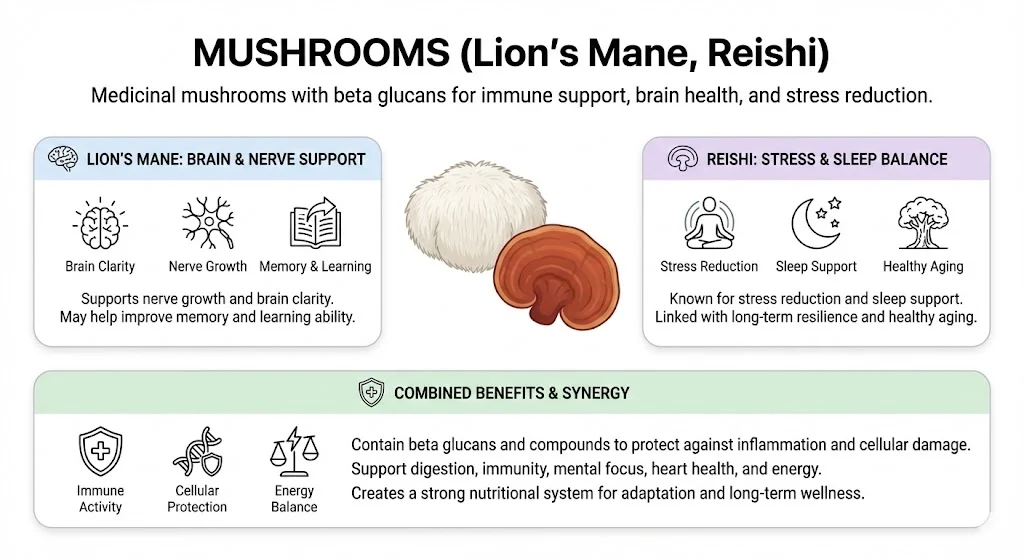
Medicinal mushrooms contain beta glucans that strengthen immune activity. Lion’s Mane supports nerve growth and brain clarity.
It may help improve memory and learning ability. Reishi is known for stress reduction and sleep support. These mushrooms also contain compounds that protect against inflammation and cellular damage. They are linked with long term resilience and healthy aging.
Together, these superfoods support digestion, immunity, mental focus, heart health, and energy balance. When used in combination, they create a strong nutritional system that helps the body adapt to stress and maintain wellness over time.
Fibermaxxing & the New Superfood Trend
The main nutrition trend of 2026 is fibermaxxing. This means increasing daily fiber intake to support gut health and longevity. Fiber helps feed healthy gut bacteria and improves digestion. It also controls hunger and supports heart health.
Foods such as chia seeds, beans, quinoa, kale, and berries are now promoted for their fiber content. This trend replaces earlier protein-heavy diets. People now seek balance between fiber, antioxidants, and healthy fats.
Superfoods are also chosen for quick meals. Powders, snack bars, and smoothie blends make them easy to use. This makes healthy eating more practical for busy routines.
Evidence Based Benefits and Public Data ( Data From X )
Recent nutrition discussions highlight both praise and caution. Many users report real improvements in digestion, blood pressure, and energy. At the same time, some groups question plant foods due to anti-nutrients such as oxalates and phytates. Most experts agree that moderation and preparation methods like soaking and cooking reduce these effects.
Below is a table showing numeric data shared in public discussions about chia seeds and health outcomes.
| Health Factor | Observed Effect |
|---|---|
| Soluble fiber (2 tbsp chia) | Up to 11 grams |
| Blood pressure change | Drop of 3 to 7 mmHg |
| Calorie intake later in day | Reduced by about 25 percent |
| Iron content vs spinach | Around 3 times higher |
| Potassium vs banana | Around 64 percent higher |
These numbers show why chia seeds are widely praised. At the same time, some users report bloating if eaten in excess. This shows the need for personal testing and portion control.
How Superfoods Work Together
Superfoods show stronger results when combined. Fiber from chia supports gut bacteria. Antioxidants from berries reduce oxidative stress. Spices reduce inflammation. Together, they create a balanced system for energy and recovery.
Examples of useful combinations include:
- Chia with berries for fiber and antioxidants
- Turmeric with ginger for joint and immune support
- Matcha with cacao for mental focus and mood balance
- Mushrooms with quinoa for immunity and protein
This synergy helps deliver steady energy, better sleep, and disease resistance without pills.
Addressing the Controversy
Some critics label superfoods as marketing terms without scientific meaning. They point to plant toxins and mineral blockers. These concerns exist but mostly apply to extreme intake or raw forms.
Moderation solves most risks. Cooking quinoa removes saponins. Soaking seeds improves digestion. Balanced diets reduce negative effects.
People differ in digestion and tolerance. What works for one person may not suit another. The best approach is gradual use and observation of body response.
Practical Ways to Use Superfoods
Superfoods do not require complex recipes. They fit easily into everyday meals.
- Add spirulina or moringa to smoothies
- Mix chia into oatmeal or yogurt
- Use turmeric and ginger in soups and rice
- Sprinkle cacao on fruit bowls
- Drink matcha instead of sugary beverages
- Add mushrooms to stir fry meals
- Use quinoa as a rice replacement
These habits make healthy eating consistent and affordable.
Long Term Health Impact
Superfoods support long term wellness through:
- Improved gut health
- Lower inflammation
- Better heart and brain function
- Stronger immunity
- Balanced blood sugar
They do not replace medical treatment. They strengthen the foundation of daily nutrition. Their role is prevention and maintenance rather than cure.
With rising lifestyle diseases and stress, these foods help build resilience. Their popularity is expected to grow toward a global market value projected to reach hundreds of billions by 2033.
Final Thoughts
Superfoods like spirulina, moringa, berries, chia seeds, turmeric, mushrooms, and cacao are powerful additions to modern diets. They support fiber intake, antioxidant defense, and metabolic balance. The current trend focuses on gut health and longevity rather than quick fixes.
The debate around superfoods encourages smarter choices. Evidence supports many benefits when used correctly. Balance, variety, and moderation remain the key principles.
When combined with normal meals and active lifestyle habits, superfoods offer practical and sustainable health upgrades for everyday life.
Tags: superfoods, gut health, fibermaxxing, antioxidant foods, natural nutrition, healthy lifestyle
Related Posts :




Share This Post