Yoga Asanas for Digestion: 8 Gentle Poses to Support Gut Comfort
Yoga Asanas for Digestion: 8 Gentle Poses to Support Gut Comfort
Digestive discomfort is frequently discussed in daily wellness conversations. Feelings such as bloating, gas, heaviness after meals, or irregular digestion are commonly experienced.
Many people explore lifestyle-based practices alongside their routines rather than relying on quick solutions every time. Yoga asanas for digestion are often explored because they focus on body awareness, movement, and relaxation, which are traditionally associated with digestive comfort.
Public discussions and wellness communities often highlight yoga as a gentle practice connected to overall gut awareness. People frequently mention that mindful movement and breathing help them feel lighter and calmer after meals. The relationship between body movement, breath, and mental relaxation is a key reason yoga continues to be discussed in the context of digestive well-being.
Key Takeaways
- Yoga asanas are traditionally associated with digestive awareness and relaxation
- Gentle movement and posture changes support comfort in the abdominal region
- Mental calmness is widely discussed as an important factor in digestion
- Yoga can be easily included in daily routines with minimal space or equipment
- These practices are part of long-standing wellness traditions
How Yoga Asanas Support Digestive Health?
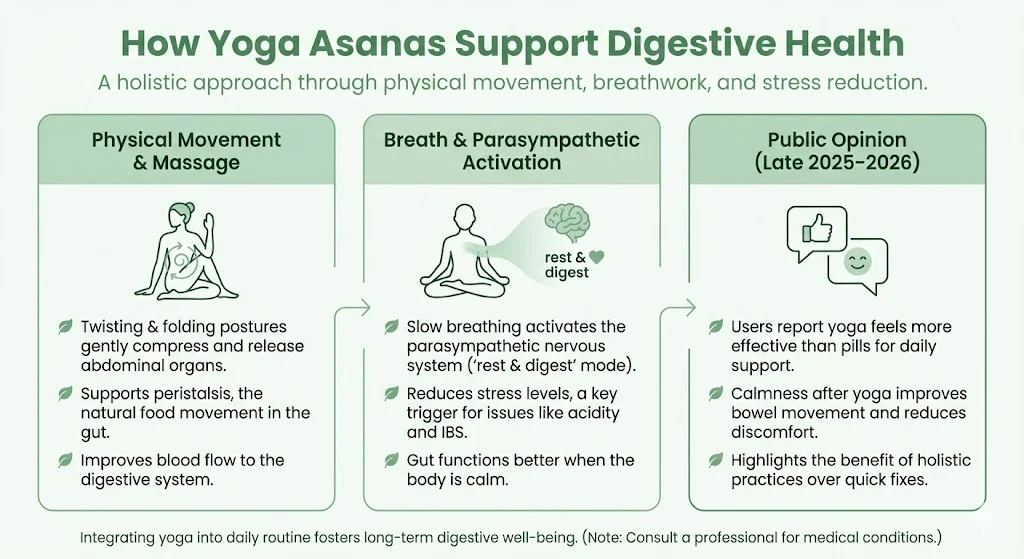
Yoga is commonly discussed as a practice that encourages gentle physical movement and body awareness. Certain postures involve bending, twisting, and folding, which are traditionally believed to stimulate the abdominal area and support natural bodily processes. These movements are often associated with improved circulation and posture.
Breathing plays an important role in yoga practice. Slow and controlled breathing is widely associated with relaxation and nervous system balance. A calm mental state is often discussed as supportive for digestion, as stress and tension are commonly linked to digestive discomfort in everyday experiences.
Online discussions from recent years often reflect positive perceptions of yoga as part of a balanced lifestyle. Many individuals describe feeling calmer and more comfortable after incorporating gentle movement and breathing into their routine.
Why Yoga Is Preferred Over Quick Remedies?
Many people explore lifestyle-based practices instead of depending solely on quick solutions. Yoga is often viewed as a holistic approach because it combines posture, breathing, and mindfulness. Rather than focusing on immediate outcomes, it encourages consistent habits and body awareness over time.
Accessibility is another reason yoga is widely practiced. It does not require special equipment and can be adapted for beginners. Even short sessions are commonly included in daily routines, especially during busy schedules.
Social media and wellness communities often share simple yoga routines practiced after heavy meals or during festivals. Many describe these routines as a way to reconnect with the body and restore a sense of balance.
Popular Yoga Asanas for Digestion
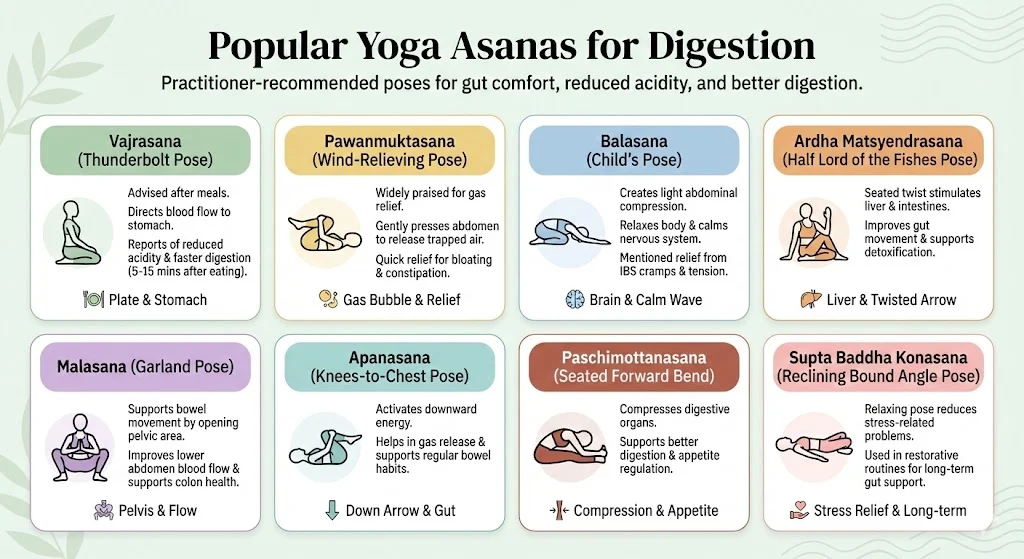
The following yoga asanas are commonly mentioned in traditional practice and public wellness discussions. They are often associated with comfort, posture support, and relaxation of the abdominal area.
- Vajrasana
This seated posture is traditionally practiced after meals. It is often associated with upright posture and mindful breathing. - Pawanmuktasana
This pose involves gentle knee-to-chest movement and is commonly discussed in the context of abdominal comfort. - Balasana
Child’s pose encourages relaxation and forward folding. It is often included in calming routines. - Ardha Matsyendrasana
This seated twist is traditionally practiced to encourage spinal mobility and internal awareness. - Malasana
The squat posture supports hip and pelvic mobility and is part of many traditional movement practices. - Apanasana
This gentle pose focuses on slow movement and breathing coordination. - Paschimottanasana
Forward folding postures are often associated with relaxation and body awareness. - Supta Baddha Konasana
This restorative posture is commonly included in relaxation-focused yoga routines.
What People Are Saying About Yoga for Digestion ( Data Taken From X )
Recent online discussions reflect a growing interest in yoga as part of digestive wellness routines. Many individuals describe practicing gentle poses after heavy meals as part of their personal habits. Others highlight how relaxation-focused postures support mental calmness.
Traditional yoga content continues to receive attention online. Viewers often appreciate the simplicity of these practices and how they can be adapted to daily life.
Wellness-focused conversations frequently mention movement and posture awareness as important factors for maintaining comfort during sedentary lifestyles.
Yoga for IBS and Chronic Digestive Issues
People who experience ongoing digestive sensitivity often look for low-impact movement options. Yoga is frequently discussed as a gentle activity because it emphasizes controlled movement and relaxation rather than intensity.
Wellness discussions and observational studies often associate regular yoga practice with improved stress management and body awareness. These factors are commonly linked to digestive comfort in daily life.
Many practitioners emphasize gradual practice and consistency, focusing on comfort and personal limits rather than duration or intensity.
Best Time to Practice Yoga for Digestion
Morning yoga is commonly practiced to encourage body activation and routine building. Some people also include gentle postures later in the day to support relaxation after meals.
After periods of heavy eating, short and calm routines are often preferred. These sessions typically focus on slow movement and rest.
Combining Yoga with Breathwork
Breathing techniques are an essential part of yoga practice. Slow, mindful breathing is commonly associated with relaxation and mental focus. Many routines combine gentle movement with simple breathing patterns.
This combination is often discussed in wellness circles as supportive for overall balance and long-term habit building.
Final Thoughts On Yoga Asanas For Digestion
Yoga asanas for digestion continue to be widely discussed because they focus on posture, movement, and relaxation. Public conversations highlight their role in supporting mindful living and body awareness. These practices are easy to adapt and fit into everyday routines.
As part of a balanced lifestyle, yoga remains a widely trusted wellness practice rooted in tradition and personal experience. This article is for general wellness information only and does not replace professional medical advice, diagnosis, or treatment
Related Posts :





Share This Post