Yoga Postures For Sleep: Gentle Night Routine To Calm Your Mind And Body
Yoga Postures For Sleep: Gentle Night Routine To Calm Your Mind And Body
Many people today struggle with sleep problems. Busy work schedules, screens, stress and late-night thinking can all disturb natural rest. Yoga postures for sleep are becoming one of the most trusted ways to relax the body and calm the nervous system before bed. These movements are slow, soothing and easy to follow, which makes them ideal for a peaceful night routine.
Yoga focused on sleep has gained strong popularity through wellness communities and social platforms. People are now including bedtime yoga along with habits like journaling, warm showers or magnesium to help the mind slow down before entering sleep. Research in recent years also shows that yoga can reduce insomnia, ease anxiety and even increase total sleep time.
Table of Contents
Key Takeaways On Yoga Postures For Sleep
- Gentle bedtime yoga can lower stress and calm the nervous system
- Postures help relax tight muscles and release daily fatigue
- Yoga supports deeper sleep quality and reduces restless nights
- Slow breathing is important to help the mind unwind
- Simple routines of 10 to 30 minutes are enough for most people
Bedtime yoga is not about building strength or pushing the body. Instead, it focuses on relaxation, stillness and slow breathing. These practices help activate the parasympathetic nervous system. This system is responsible for rest and recovery. When it turns on, the heart rate becomes steady and the mind feels calmer. Many people wake up feeling refreshed instead of heavy or drained.
Sleep yoga is also known to improve mental wellbeing. Users online share that they sleep deeper and wake up feeling more balanced. Some even report relief from stress related disorders. The common feeling is a sense of lightness in the body. Words like refreshed, free, peaceful and restored appear often in public posts about bedtime yoga.
Also Read: Face Yoga Exercises for Double Chin: Natural Methods Gaining Global Popularity
Why Yoga Helps With Better Sleep
Yoga helps improve sleep quality because it combines movement with breathing. This creates awareness between the body and mind. When you stretch slowly, the body releases muscular tension that builds throughout the day. When you breathe deeply, the brain receives signals that it is safe to relax.
Studies also suggest that yoga lowers cortisol levels. Cortisol is the stress hormone that sometimes stays high at night. If cortisol remains high, the brain may stay alert. Gentle bedtime yoga helps let that stress go. It also supports natural melatonin release, which is the hormone linked to sleep timing.
Another key benefit is pain relief. Simple yoga postures can reduce back pain, shoulder tightness, hip stiffness and neck strain. When pain reduces, it becomes easier to rest without constant discomfort.
Yoga also improves emotional balance. Slow breathing reduces feelings of anxiety. The mind stops racing. Over time, these calm routines become a comforting daily habit.
Recent Public Interest And Trends
In 2026, bedtime yoga remains one of the top wellness topics online. People share routines like “30 Minutes of Bedtime Yoga for Lower Cortisol and Better Sleep.” Others talk about deep relaxation videos or quiet guided sessions. Many describe the experience as nurturing and kind to the body.
There are also posts celebrating bedtime yoga as part of recovery or general wellbeing. Some say it eases symptoms linked to mental stress. Others practice with family members or pets. Short routines of 10 to 30 minutes are the most popular. These are seen as simple enough to do daily.
The overall conversation is strongly positive. Most users mention deeper sleep, calmer moods and less physical pain. Some do it every night as a gift to themselves.
Best Yoga Postures For Sleep
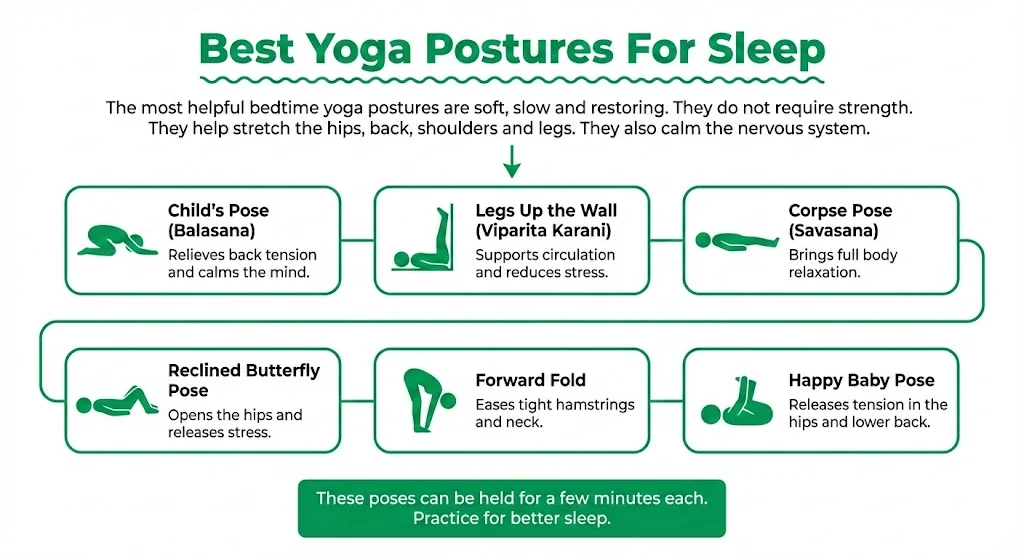
The most helpful bedtime yoga postures are soft, slow and restoring. They do not require strength. They help stretch the hips, back, shoulders and legs. They also calm the nervous system.
Below is one listicle with the most recommended sleep yoga postures:
- Child’s Pose (Balasana): Relieves back tension and calms the mind
- Legs Up the Wall (Viparita Karani): Supports circulation and reduces stress
- Corpse Pose (Savasana): Brings full body relaxation
- Reclined Butterfly Pose: Opens the hips and releases stress
- Forward Fold: Eases tight hamstrings and neck
- Happy Baby Pose: Releases tension in the hips and lower back
Child’s Pose (Balasana): Relieves back tension and calms the mind
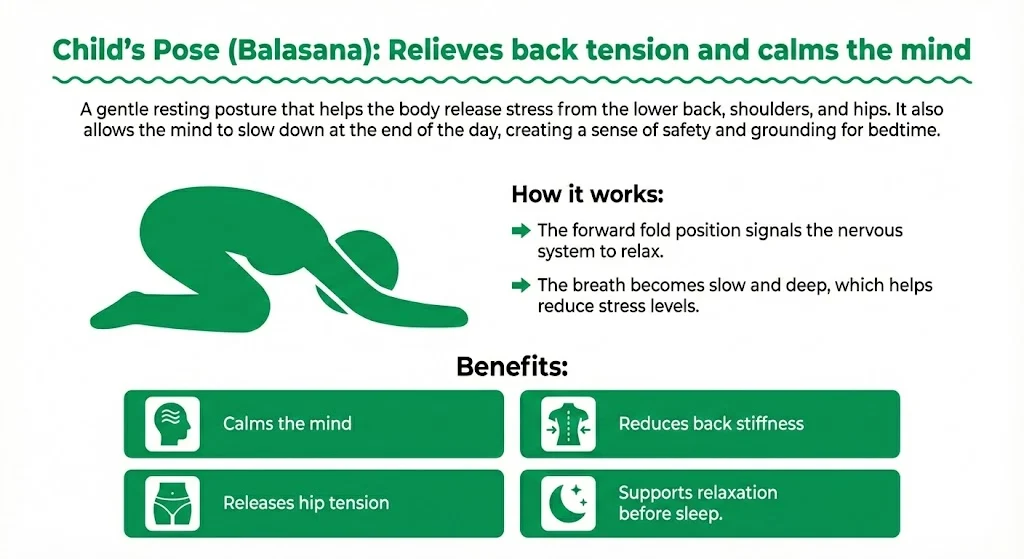
Child’s Pose is a gentle resting posture that helps the body release stress from the lower back, shoulders and hips. It also allows the mind to slow down at the end of the day. This pose creates a sense of safety and grounding, which makes it ideal for bedtime.
How it works:
The forward fold position signals the nervous system to relax. The breath becomes slow and deep, which helps reduce stress levels.
Benefits:
- Calms the mind
- Reduces back stiffness
- Releases hip tension
- Supports relaxation before sleep
Legs Up the Wall (Viparita Karani): Supports circulation and reduces stress
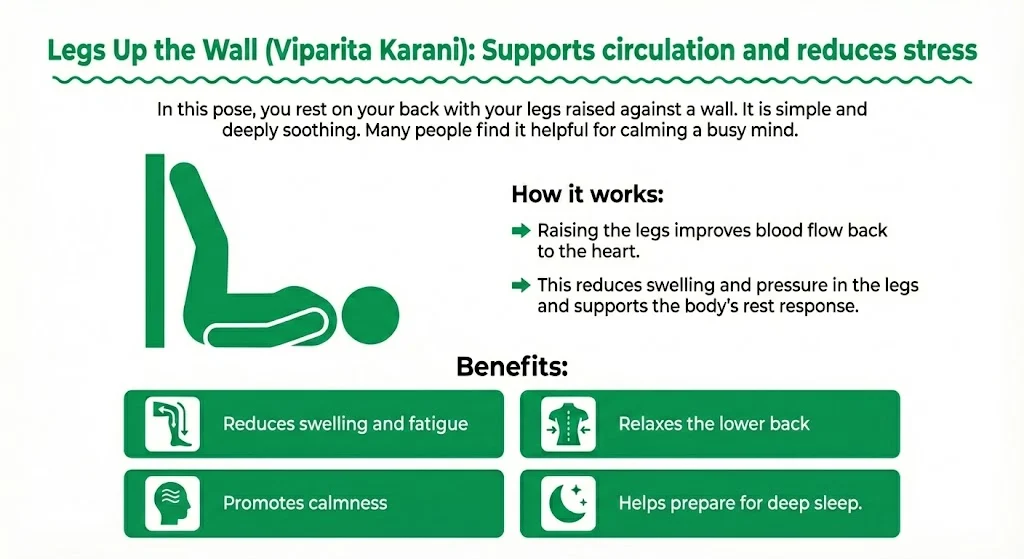
In this pose, you rest on your back with your legs raised against a wall. It is simple and deeply soothing. Many people find it helpful for calming a busy mind.
How it works:
Raising the legs improves blood flow back to the heart. This reduces swelling and pressure in the legs and supports the body’s rest response.
Benefits:
- Reduces swelling and fatigue
- Relaxes the lower back
- Promotes calmness
- Helps prepare for deep sleep
Corpse Pose (Savasana): Brings full body relaxation
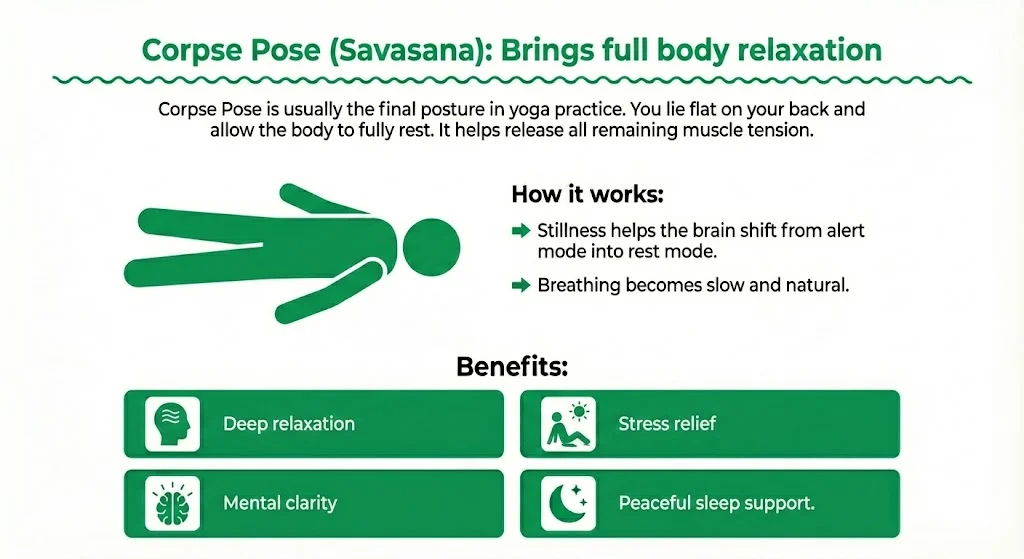
Corpse Pose is usually the final posture in yoga practice. You lie flat on your back and allow the body to fully rest. It helps release all remaining muscle tension.
How it works:
Stillness helps the brain shift from alert mode into rest mode. Breathing becomes slow and natural.
Benefits:
- Deep relaxation
- Stress relief
- Mental clarity
- Peaceful sleep support
Reclined Butterfly Pose: Opens the hips and releases stress
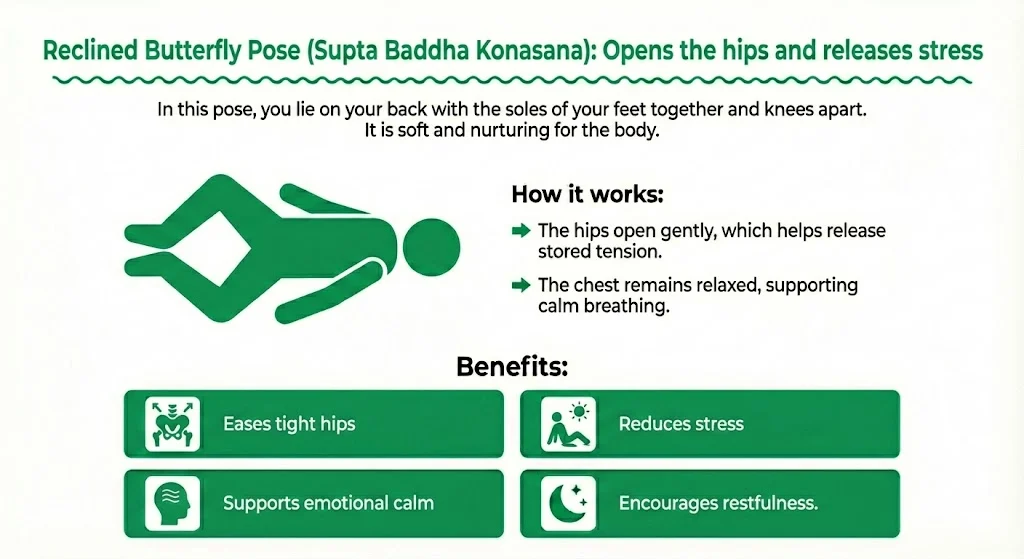
In this pose, you lie on your back with the soles of your feet together and knees apart. It is soft and nurturing for the body.
How it works:
The hips open gently, which helps release stored tension. The chest remains relaxed, supporting calm breathing.
Benefits:
- Eases tight hips
- Reduces stress
- Supports emotional calm
- Encourages restfulness
Forward Fold: Eases tight hamstrings and neck
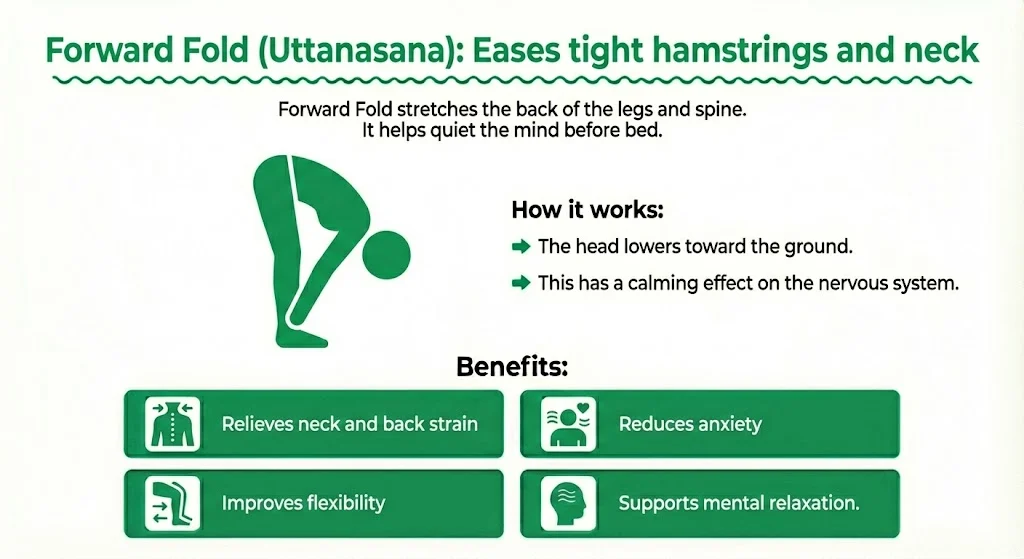
Forward Fold stretches the back of the legs and spine. It helps quiet the mind before bed.
How it works:
The head lowers toward the ground. This has a calming effect on the nervous system.
Benefits:
- Relieves neck and back strain
- Reduces anxiety
- Improves flexibility
- Supports mental relaxation
Happy Baby Pose: Releases tension in the hips and lower back
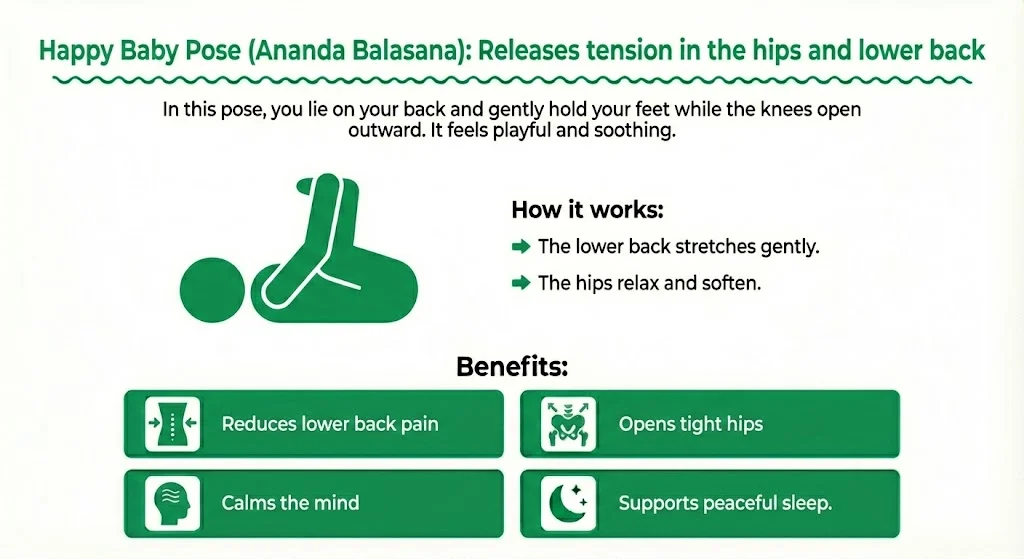
In this pose, you lie on your back and gently hold your feet while the knees open outward. It feels playful and soothing.
How it works:
The lower back stretches gently. The hips relax and soften.
Benefits:
- Reduces lower back pain
- Opens tight hips
- Calms the mind
- Supports peaceful sleep
These yoga postures work best when practiced slowly with steady breathing. They relax the body, calm the nervous system and prepare the mind for deep, natural sleep.
These poses can be held for a few minutes each. The key is slow breathing and comfortable positioning. Many people also use pillows or blankets for support.
How Bedtime Yoga Supports The Nervous System
Breathwork is a major part of yoga for sleep. Deep breathing tells the brain that there is no danger. As a result, the body relaxes. This reduces heart rate and muscle tension. The mind becomes quieter.
Yoga also improves awareness. When you focus on the breath, thoughts slow down. This creates mental clarity. Instead of worrying about tomorrow, the mind rests in the present moment.
Who Can Practice These Postures
Bedtime yoga is suitable for most people. It works well for students, professionals, parents, older adults and anyone dealing with stress. It is helpful for those with long work days, digital fatigue or mental strain.
Short sessions work best. Even 10 minutes can make a difference. Some prefer 20 to 30 minutes when time allows.
Health Benefits Beyond Sleep
People report additional benefits such as:
- Better posture
- Reduced anxiety
- Improved flexibility
- Lower daily fatigue
- Emotional balance
Some also pair yoga with healthy evening routines like staying off screens before bed or walking during the day.
A Calming Night Habit
The most powerful results come from consistency. Practicing bedtime yoga most nights can train the mind to relax at the same time each day. This supports a stable sleep rhythm.
Choose quiet lighting. Keep the environment peaceful. Avoid stimulating exercises at night. Focus on slow stretches and steady breathing.
Yoga postures for sleep are more than exercise. They are a gentle way to connect with your body at the end of a long day. With regular practice, they can help you fall asleep faster and wake up feeling more restored.
Tags: yoga for sleep, bedtime yoga, relaxation yoga, insomnia relief, wellness routine, restorative yoga
Related Posts :


Share This Post